
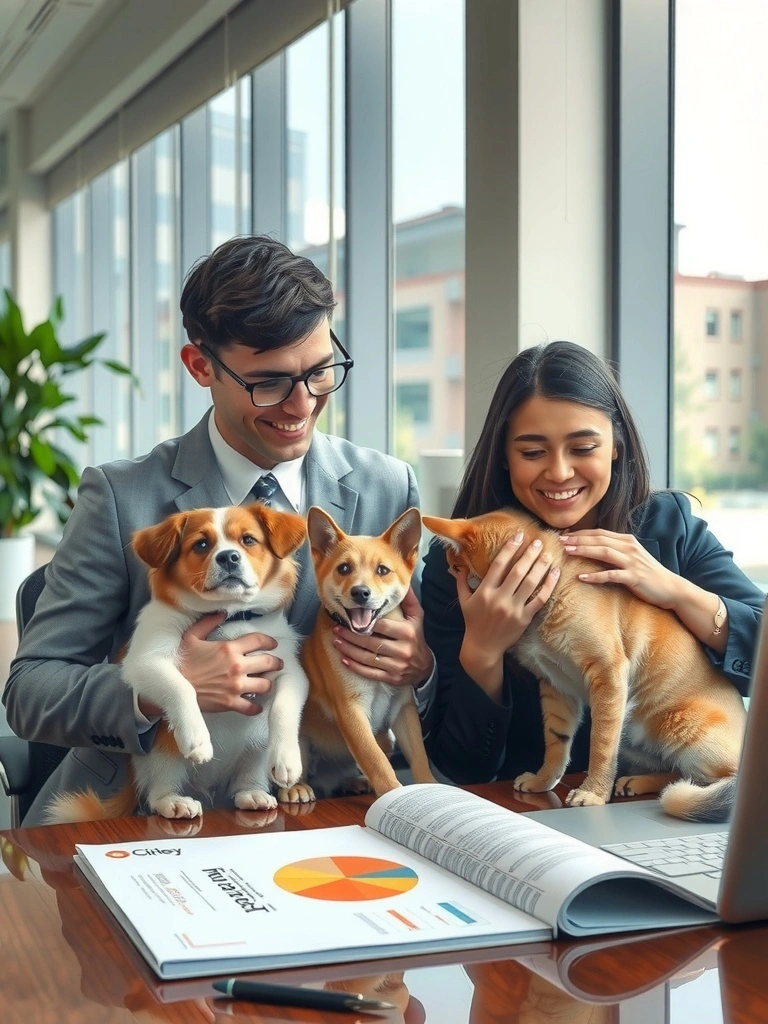
The city skyline outside the floor-to-ceiling windows draws clear layers, illuminated by a kaleidoscope of sunlight, with the glass curtain reflecting the midday brilliance. The space design of the modern office emphasizes brightness and comfort, with green plants in the corners and soft carpets creating a warm, home-like atmosphere. However, what catches the eye the most are the few leisurely wandering furry creatures: a quick and agile orange cat gracefully circles the back of a chair, while at the other end, a gentle Labrador lies on the carpet, accepting the tender touches of passing colleagues.
With the global transformation of office work styles, corporate competition has shifted from traditional efficiency to a focus on "employee happiness" and "mental health." More and more business professionals realize that long hours of high-pressure work and complicated decision-making can easily lead to anxiety and burnout. Thus, introducing cats and dogs into the office space has become an innovative attempt for the new generation of companies seeking workplace harmony, fostering creativity, and stimulating employee potential.
Looking around this modern office, reports on future trend forecasts scatter across the desks, with covers emblazoned with striking titles: "The New Relationship Between Humans and Animals: The Workplace Revolution of Companion Animals." A group of business professionals in formal suits, yet relaxed, frequently radiate sincere smiles thanks to the company of their furry companions. They occasionally lean down to gently stroke the cat’s back or offer a soft touch to the lazy dog lying on its back. While savoring their coffee, they discuss new industry trends and changes in the global market, while also alleviating stress and infusing warmth and friendliness into the atmosphere.
The companionship of animals in the workplace has quietly become a new battlefield for corporate competitiveness. According to the latest survey, nearly half of innovative companies have established pet-friendly policies, not only allowing employees to bring their pets to the office but also actively hiring professional animal caregivers to ensure the cleanliness and safety of the workspace. Animals are not only seen as stress relievers but also regarded as intangible assets that enhance team communication and strengthen corporate identity.
In this modern office space, the rhythm of the morning is consistently gentle and calm. Employees enter the lobby one after another, with cats meowing around their feet for attention, and several dogs wagging their tails happily upon seeing familiar faces. Some squat down to play with them, while others use the moments of interaction with the animals to slowly return to a state of calm. Such scenes become the natural interface for communication among colleagues, making the moments before work enjoyable and relaxed.
Cats occasionally sneak into the filing cabinets to explore, while others jump onto the windowsill to bask in the sun; dogs sit in the lounge area, cautiously sniffing the shoes of visitors, then peacefully resting under the conference table. These seemingly everyday small actions actually serve as gentle clues woven into the workplace culture. Employees report that the presence of animals makes interpersonal interactions more natural, and the formerly indifferent office atmosphere undergoes a wonderful transformation. Casual chats during walks with dogs greatly help to break down barriers and quickly integrate new team members.
Studying the future trend forecast reports on desks reveals a highly optimistic outlook for "animal companion offices" within the industry. The report cites several scientific studies that confirm animals can lower blood pressure and heart rate, as well as reduce anxiety symptoms. Surveyed employees respond that bringing pets to work significantly reduces anxiety and irritability, while also increasing creativity and collaboration. Furthermore, workplace animals can serve as emotional regulators, easing the tension of meetings and becoming the best icebreakers when discussing new proposals.
During weekly meetings, the company often includes a "Furry Companions Integration" discussion segment. Several senior managers share their observations and insights: during the busiest closing periods, teams with dogs clearly exhibit better coordination, and communication barriers dissolve rapidly. Cats, due to their unique elegance and aloofness, often become the focal point of discussions, as team members eagerly share their pet care experiences, thus bridging distances over daily trivial matters.
The report also points out that animal-friendly offices have a significant advantage in recruiting and retaining talent. More and more young professionals favor such environments, believing they reflect a company’s commitment to employee quality of life. Following the pandemic, hybrid work and remote work patterns have become prevalent, leading people to demand more balance between work and life, which aligns perfectly with the wave of humane management represented by animal companion offices.
Of course, implementing animal integration policies also brings numerous challenges. From the office layout and planning to strategies for dealing with employee health allergies, companies must establish a series of detailed execution standards. Professional trainers can enter the company to correct behavior and provide etiquette guidance for all accompanying animals, ensuring they can coexist gently with people, while also regularly arranging cleaning and disinfection to prevent the accumulation of infectious diseases and allergens. The HR department should provide designated areas for employees who dislike or are allergic to animals, ensuring the right to opt in or out and maintaining the workplace's diversity and inclusivity.
At the conference table, a project manager has just completed an important presentation. She smiles as she pushes her notebook to the edge of the table, and the cat immediately jumps up and curls up. A nearby colleague can’t help but smile at the sight, as the anxious atmosphere instantly dissipates. A few minutes of cat therapy, combined with the innovative industry perspectives presented in the trend forecast report, sparks intense discussions within the team—how to further optimize the office experience through "workplace animal companionship," even developing new employee benefits plans.
Regarding the enhancement of workplace happiness, an expert in the report stresses: “If companies can combine humane management with diverse animal companionship, it will effectively enhance employees' sense of value and corporate loyalty.” Data analysis shows that employees who regularly interact with animals generally exhibit higher productivity and a greater willingness for creative input. Psychological surveys also confirm that the stress-relieving effects of animals are evident, and after long-term pressure release, both the rate of sick leave and turnover in the workplace decrease.
Moreover, workplace animal companionship is driving a wave of emerging industries. From professional office pet supplies to corporate-specific animal trainers and workplace-friendly veterinary services, there is no shortage of pet furniture designs that focus on office space aesthetics or animal activity areas that comply with acoustic design standards. An "afternoon entertainment zone" specifically for dogs, equipped with low ramps and plush tunnels, allows company employees to relax and play with their pets before leaving work; at that moment, the conference room windows become a warm canvas for dog noses and kitty paws, adorned with traces of playful exploration.
This innovative model also wins customer favor. Many partners praise the pet-friendly office environment, believing it reflects the company’s humane and approachable values. During business negotiations, clients can also enjoy relaxing moments with adorable cats, creating more cooperation motivation. When hosting guests, animals become a central topic, leaving a lasting impression and enhancing mutual trust.
In the corner of the office by the coffee machine, a young designer is enthusiastically chatting with a senior engineering director. They share amusing anecdotes and challenges about their cats. Naturally, the conversation extends to the artistic style and user experience adjustments of new projects. A cat jumps gently into the designer's lap, adding warmth and resonance to the discussion. Such blending situations break down barriers of seniority and hierarchy, subtly facilitating the flow of knowledge and sparking creative thinking.
The conclusion of the future trend forecast report specifically points out that, after initial trials of office animal companionship in recent years, it is expected to enter a new era of deep optimization and technological integration. Smart pet identification systems and interactive behavior sensing devices will integrate with artificial intelligence, helping companies more effectively track animal activities, health, and emotional changes, and adjust employee shifts and meetings accordingly.
Additionally, the report suggests that companies should further promote the position of "animal counselors," dedicated to coordinating human-animal interactions, planning animal companionship courses, emotional management training, and emergency response plans for office animals. Currently, more companies have begun introducing animal counselors to guide employees on correct ways to interact with their furry companions, enhancing workplace harmony and safety.
As the market evolves rapidly, the trend of office animal companionship is no longer merely an innovative exception; it reflects the inevitable choice of the modern workplace’s pursuit of employees' physical and mental health, creativity stimulation, and happiness. Experts suggest that the long-term success of corporate organizations in the new generation of workplace trends will depend on their ability to blend technology with the softness of humanity, using "furry companions" to bridge the gap between people, creating a vibrant and creative new office ecology.
In the afternoon, the floor-to-ceiling windows reflect the spreading sunlight and the shadows of passing clouds. The cat remains peacefully napping on the bookshelf, while the dog gently nestles by its owner's feet, and the reports on the conference table are flipped through page by page by passing hands. This scene, seemingly tranquil, harbors the immense transformative potential of the future workplace. As furry companions glide effortlessly through the office space, employees' smiles become more frequent, and creative sparks are ignited—perhaps this is the important secret to the ongoing rise of workplace happiness in the new era.