
Fashion Enlightenment: A Style Revolution that Starts from the Study
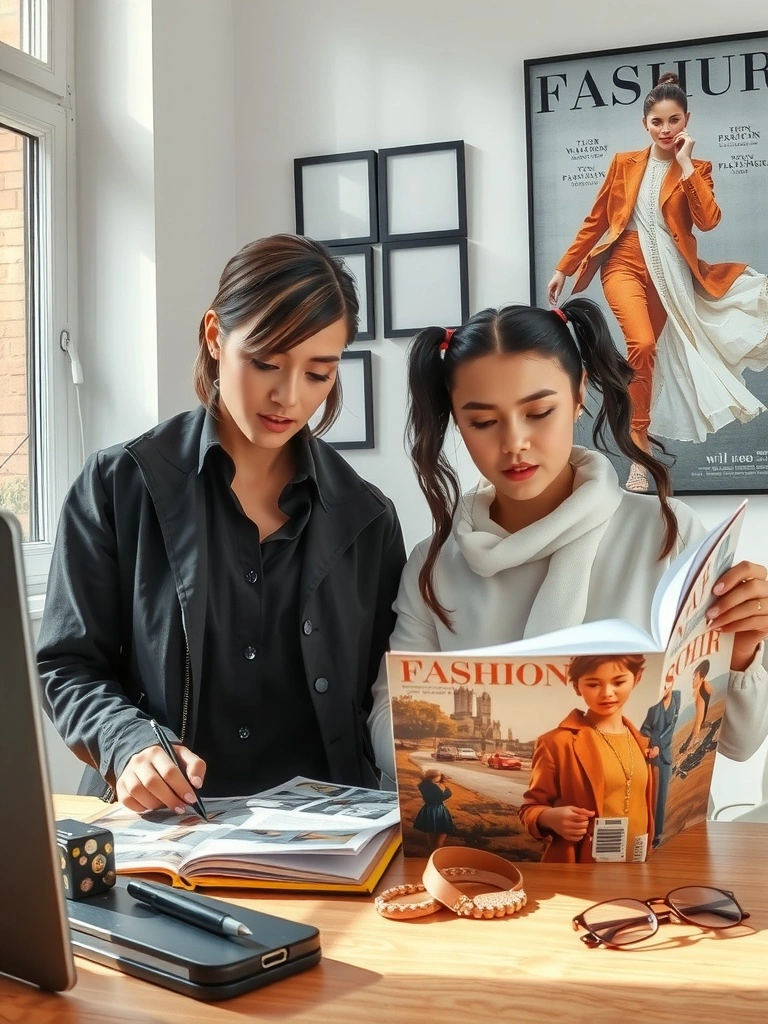
Afternoon sunlight streams through the floor-to-ceiling windows of the modern and bright study, casting a soft glow that outlines every detail. On the natural wood-patterned desk, a stack of brand new fashion magazines appears untouched by dust, while a collection of accessories piled in the corner—metallic necklaces, sparkling earrings, and elegant silk scarves—shine brightly under the light. Trendy posters hang along the walls, reflecting a contemporary art atmosphere and fashion vibe. This is not any fashion week backstage or a high-end club frequented by celebrities, but a modern study space dedicated to fashion dreamers.
Today, a fashion expert is personally stationed in this study, guiding a newcomer to the fashion world as they gradually unravel the mysteries of fashion magazines, breaking through the fog of style choices and igniting a desire for self-expression. This scene, while seemingly simple, is rich with layers of knowledge, serving as an unattainable dream starting point for countless style enthusiasts.
When literature meets aesthetics
The air in the study is filled with the scent of new books and scented candles, everything is so orderly. The fashion expert sits in a leather swivel chair, wearing a minimalist yet intricately detailed long shirt, the cuffs slightly rolled up, a pearl bracelet glimmering on the wrist with movement. He gently taps the magazine cover, signaling the start of today’s "Fashion Enlightenment Class."
"Fashion is not just about clothing; it's a practice of life philosophy," the expert speaks in a gentle yet affirming tone. "Through magazines, we learn how to observe, analyze, draw inspiration from the content, and ultimately find our own rhythm." This assertion captures the newcomer’s attention, creating a focused atmosphere in the room.
The first step is to read the selected publication. The expert carefully points out that each fashion magazine has its unique style angles and editorial planning; for example, some focus on trend forecasting while others prefer narrative photography and celebrity interviews. The expert picks up a magazine with an avant-garde cover design, swiftly scans the table of contents, demonstrating how to grasp the thematic perspective. He encourages the newcomer to read magazines of different styles to train their aesthetic sensitivity from various angles and to try jotting down their favorite words and images to create a pocket inspiration notebook.
Breaking templates and cultivating a discerning eye
The professional guidance extends beyond teaching reading techniques; it emphasizes the ability to "observe details" and "question conventions." The fashion expert leads the newcomer to examine the inner pages' large images, analyzing how photographers use light and shadow to create atmosphere and how makeup and accessories enhance character personalities. He taps on a crystal ring and a vibrantly colored silk scarf on the desk, stressing the importance of accessories outside of clothing in the overall look.
"Many fashion classics actually stem from a daring approach to experimentation and breaking self-imposed limitations," the expert says, guiding the newcomer to randomly select accessories while narrating recurring case studies of 'personal style redefinition' in the fashion world. "We can try to use these accessories to mimic looks from the magazine, then make adjustments to develop our unique style."
Encouraged by the expert, the newcomer tries to mix a denim jacket, metallic necklace, and a vintage headband, pairing them with plain wide-leg trousers. The posters on the wall showcase the free-spirited style of the 1970s colliding with modern street fashion. The newcomer compares the magazine images with their current look, and inspiration sparks in their mind. The expert gradually guides, "What details do you think make the figures in the posters stand out? How can we incorporate these elements into our real outfits?"
Stepping into the world of magazines, traversing the stream of fashion
Reading fashion magazines is not merely about absorbing trend information; it’s akin to stepping into a kaleidoscope of styles. The expert explains, "Each issue, each styling project tells a small, independent story. Reading closely for the cultural symbols embedded in the texts and appreciating different regional aesthetic concepts can help us broaden our style perspectives."
Modern magazines no longer focus solely on clothing as the only protagonist; they encompass elements of color psychology, literature and art, dietary habits, pets, travel, and more. "Look, this issue focuses on urban sports trends, but it also analyzes the history of sneaker design and the cultural logic behind it," the fashion expert flips through the pages quickly, explaining how the editorial team combines professional reviews with everyday scenes. "This allows fashion to transcend its external meaning and integrate into everyday sensory experiences."
The posters on the wall present a powerful image of a sporty female model wearing a bright athleisure set and holding a contrasting handbag, set against a sunlit city street. The expert shares, "The visual language chosen by the fashion magazines often implies the emotions they intend to convey, such as confidence, vitality, independence, or occasionally elegant nostalgia."
Rewinding retro and envisioning the future
Under the expert's guidance, the newcomer learns to observe the cyclical trends from magazine layouts. "Just like the currently popular retro elements that have appeared repeatedly over the past few decades. Jeans, plaid jackets, polka dot shirts… flipping through old magazines reveals that these classics always come back around every few years."
The expert emphasizes that retro is not about replication but transformation. "What is trendy now is not only the classic styles of the '70s and '80s but also incorporates modern fabrics, digital printing, and gender-fluid silhouettes. Readers need to practice distinguishing between pure homage and subversive reinterpretation."
In addition to retro, emerging technologies are also driving aesthetic trends. Digital fashion, virtual models, and NFT clothing have become new topics. "Magazines constantly attempt to break boundaries with digital media, featuring AR and VR interactive projects, even inviting readers to build personal fashion profiles online. These are all new trends in modern fashion reading."
Practical application: transforming reading into personal practice
"The study is essentially a runway for life," the expert casually states, casually lifting a printed silk scarf to demonstrate its versatility. He shows how to use the scarf not only as a hairband but also as a bag handle, waist embellishment, or even as a decorative piece hanging in a corner of the desk. "The significance of fashion accessories far exceeds single-use, just as we should train our thinking from multiple perspectives when reading fashion magazines."
Through this process, the newcomer builds a foundational judgment on layering accessories, fabric textures, and color combinations. The expert suggests, "Create a daily record of your outfits, perhaps by taking photos and pairing them with the covers, pages, or posters from the magazine you read that day, accumulating a personal aesthetic database."
A tablet on the desk is already set up with a digital magazine, and the expert encourages the newcomer to combine print and electronic content, such as using online color analysis tools to help determine which colors suit their skin tone and which items are likely to become annual favorites.
Reading fashion magazines is not merely about acquiring information; it feels like an adventure in seeking self and connecting with the external world. From the evolution of styles to the selection of perspectives, from trend forecasting to creative reorganization, every step requires the integration of personal experience, emotions, and even observational skills related to contemporary society.
An open reading space fosters creative inspiration
The fashion expert mentions: "It's very important to have a dedicated fashion reading space at home. Ideally, it should be well-lit, tidy, and richly stocked with books, along with a corner where you can physically try on accessories. The walls should be adorned with trending posters from different eras and themes, each serving as a snapshot of cultural memory."
The accessories laid out on the table are not just exclusive tools for fashion shows but also materials needed for each reader to explore their personal style. The expert encourages the newcomer to use their own items to replicate magazine looks or even design their mini themed photoshoots. "Through hands-on experiences, every day in the study can feel like a mini fashion pop-up exhibition."
Cultivating aesthetics requires simultaneous reading and practice
As the guidance deepens, the newcomer gradually opens up three pathways: observing fashion, contemplating trends, and creating a personal style. Magazines become catalysts for sparking thoughts, aesthetics, and interaction, while each experiment in the study brings reading experiences into tangible reality.
The fashion expert notes that viewing reading as the "source" of style development makes practice the "flow." Only by associating and extending what they learn can they transition from magazine pages to real-life. "Fashion is not out of reach; each page in the study is filled with inspiration, waiting to be activated by readers."
Learning fashion is akin to learning a language, requiring long-term observation, comprehensive interpretation, and ultimately translating into gestures, daily attire, and even logical thinking. It is within this bright modern study that the newcomer experiences a profound enlightenment about personal style, evolving from reading magazines, appreciating posters, experimenting with combinations, to self-practice. The colorful posters on the walls silently witness this fashion revolution that emerges from reading and belongs to everyone.