
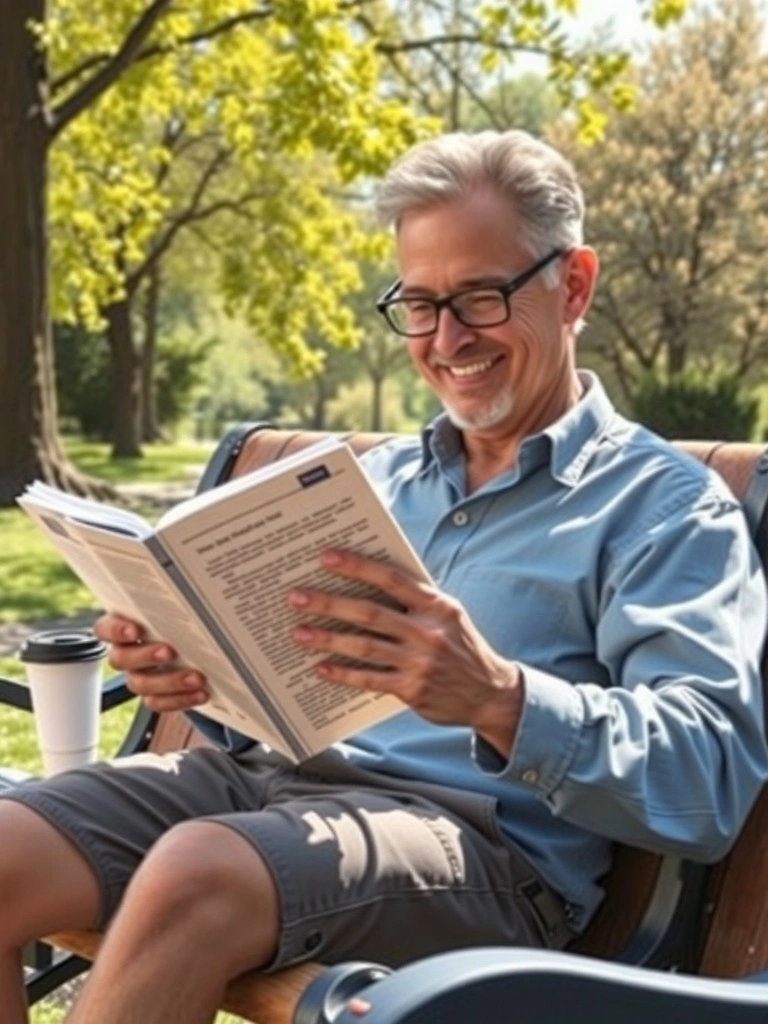
The afternoon dappled sunlight spills over the lush green park, casting large patches of shade and elongated speckles of light on the winding paths and under the trees. A gentle breeze caresses the air, little birds hop about on the grass, and the distant sound of children's laughter rings like silver bells. On an old but sturdy bench, a scene rich in narrative is quietly unfolding—a father, silhouetted by the sunlight, sits serenely in one corner of the bench. In his left hand, he lightly cradles a beautifully designed book titled "Reading Recommendations for Modern People," while his right hand gently holds a cup of coffee that still gives off a warm aroma. Beside him lies an infographic that is vivid in color and bold in its title, prominently displaying "Common Misinformation Breakdown," seemingly echoing the contents of the book he is reading.
The father wears a rare smile of contentment, filled with curiosity for knowledge amidst a comfortable and leisurely atmosphere. With the sunlight slanting down, his attentive gaze and focused expression evoke a fusion of wisdom and warmth, providing onlookers with a sense of tranquility. The rich aroma of coffee drifts through the air with the breeze, making this moment feel like an independent paradise within the city.
This report will delve into this ordinary yet extraordinary afternoon, exploring the entire reading process and thought path of this father to discuss how modern people can navigate the maze of misinformation in the era of overwhelming information, finding a subtle balance between knowledge and relaxation. Through observation and detailed analysis, we will not only interpret this father's wisdom in book selection and reading attitude but also convey an aesthetic of life that belongs to the "new social norm"—living earnestly, discerning rationally, and embracing opportunities for self-growth in every simple afternoon.
Reading "New Normal" Under the Sun
The pace of modern urban life is fast, with individuals often pulled forward by work and digital media. However, experts unanimously agree that true knowledge construction and value reflection extend beyond fast information consumed on screens; it also requires taking a moment to consciously choose content worth deeper reading. For this father on the park bench, every leisurely afternoon is a form of intellectual "self-healing."
The book he holds, addressing modern people's struggles with "information overload" and "misinformation proliferation," has already made its mark in social discussions by providing practical guides and reading strategies. It covers everything from identifying the truth of news to analyzing online myths and establishing a "healthy skepticism." As the father flips through the pages, he occasionally nods and smiles knowingly, reflecting his level of agreement with the content as well as his ability to "positively absorb" information.
Meanwhile, the infographic lying next to him presents sharp designs and clearly delineated information. It outlines the five main characteristics of fake news, how online rumors are generated and spread, and common misconceptions, culminated with a clear, step-by-step process on "how to verify the authenticity of information." This infographic serves not only as a visual aid but also as a knowledge map, adding a layer of dynamic interaction to the reading process.
The Warning Significance of the Infographic
Society is filled with various messages that can ignite emotional fluctuations with just a few words, influencing public perception. The "Misinformation Breakdown" infographic undoubtedly serves as a compass for many truth-seeking readers, providing traceable clues. Professional psychologists have found that believing in misinformation harms individual cognitive structures and often leads to unnecessary anxiety and panic. The infographic presents several amusing examples of misinformation through case studies, such as "drinking lemon water can cure all diseases" and "holding a phone close to your heart can cause illness," as typical false messages.
Data also indicates that misinformation spreads faster than the truth due to its novelty, large information load, and sensationalism. In the face of this community ecology, the infographic succinctly outlines the "five steps to verification": 1. Source comparison, 2. Expert verification, 3. Cross-referencing, 4. Judging tone, and 5. Observing meta-context. In correlation with the reading advice book's content, the father clearly resonates with these steps, creating a "self-correcting knowledge" mechanism between the two.
A Reading Time Blending Coffee Aroma and Knowledge
Even more intriguingly, the cup of coffee on the table intertwines with the infographic to create a charming atmosphere. In modern life, coffee is not just a refreshing drink; it symbolizes a catalyst for the exchange of ideas. The father takes a thoughtful sip, and as he turns the pages, the aroma of coffee seems to freeze the afternoon time, creating a sense of calm and ease. His fingers casually trace over a section titled "Deconstructing Online Myths with a Skeptical Mind," as if reminding himself and the people around him to maintain rationality and not blindly follow popular opinions or online rumors.
Expert Analysis: The Reading Skill Upgrade for Modern Individuals
In the face of an overwhelming media landscape, educators and psychologists alike urge that modern individuals must upgrade their reading literacy. The ability to "deep read" and "skim read" must be flexibly switched; whether engaging with print or digital content, one should be able to keenly identify trustworthy sources versus misinformation. Journalism experts emphasize that although traditional print reading has gradually been replaced by screens, it has been proven that slow reading enhances critical thinking, deepens overall comprehension, and builds a trustable thought structure.
The focused atmosphere exuded by the father in the park this afternoon seemingly provides a new indicator of "slow living, fast thinking." His reading not only fulfills him but may also exert a critical influence within his family. In fact, many family education experts agree that parental reading habits significantly affect the attitudes of the next generation towards information absorption. By developing a habit of observation and verification, parents not only help children discern fake news but also fill parent-child interactions with positive energy.
The Family Influence on Knowledge Construction
Under the sunlight, the child occasionally runs over to seek affection, and the father pauses from his book to softly explain the content of the infographic: "When you see uncertain information, don't just read one sentence; look at the data and think about whether it's true or not." The child nods and runs back to continue playing on the grass. This seemingly inconspicuous conversation is actually a microcosm of modern parent-child education. Psychologists point out that this type of "implicit education" helps cultivate information judgment and critical thinking skills from a young age.
A deeper observation reveals that this afternoon scene is not merely a personal moment of tranquility; it harbors the potential for elevating knowledge literacy across families, communities, and even society as a whole. Modern research confirms that when more people possess the ability to discern information, society becomes less vulnerable to the disturbances of rumors and false information, enhancing collaboration and problem-solving capabilities within communities.
The Psychological Pleasure of Reading Correct Information
The father occasionally smiles, a detail that simultaneously reflects findings from scientific research—reading accurate and logically sound information stimulates the brain to release dopamine, leading to feelings of pleasure. In contrast, the omnipresence of misinformation leads to "information fatigue," often putting readers on edge. Professional counselors suggest that arranging such slow-paced reading times can help relieve stress and maintain mental health.
Imagining the Future Trends of Modern "Listening"
As societal digitization increases, the image of a single afternoon of reading contains greater potential trends. In the future, there may be more innovative products that combine books, infographics, and interactive reading tools, allowing people to acquire knowledge and refine misinformation identification skills anytime, anywhere, whether in a park or at home. Some tech companies are even experimenting with AR technology to project dynamic infographics, merging with extended realities to push knowledge construction to new levels.
The Afternoon in the Park—A Driver of New Knowledge Life
As the afternoon shadows lengthen, the father closes the book, stretches, and reveals a satisfied smile. He gently strokes the infographic, stows it away, and before leaving, casts one last look at the projected speckles of light beneath the bench, as if contemplating what new insights this knowledge journey will bring. Although this is just one scene among countless in the city, it contains profound revelations for the era: in the face of difficulties and the complexities of information waves, as long as people maintain a passion for reading and a rational approach to analysis and judgment, they can build their own knowledge fortresses amidst the daily play of light and shadows, stepping calmly into a new golden era of information.