
Awakening Green Vitality: Pets and Owners Co-Create a New Chapter in Environmental Experimentation
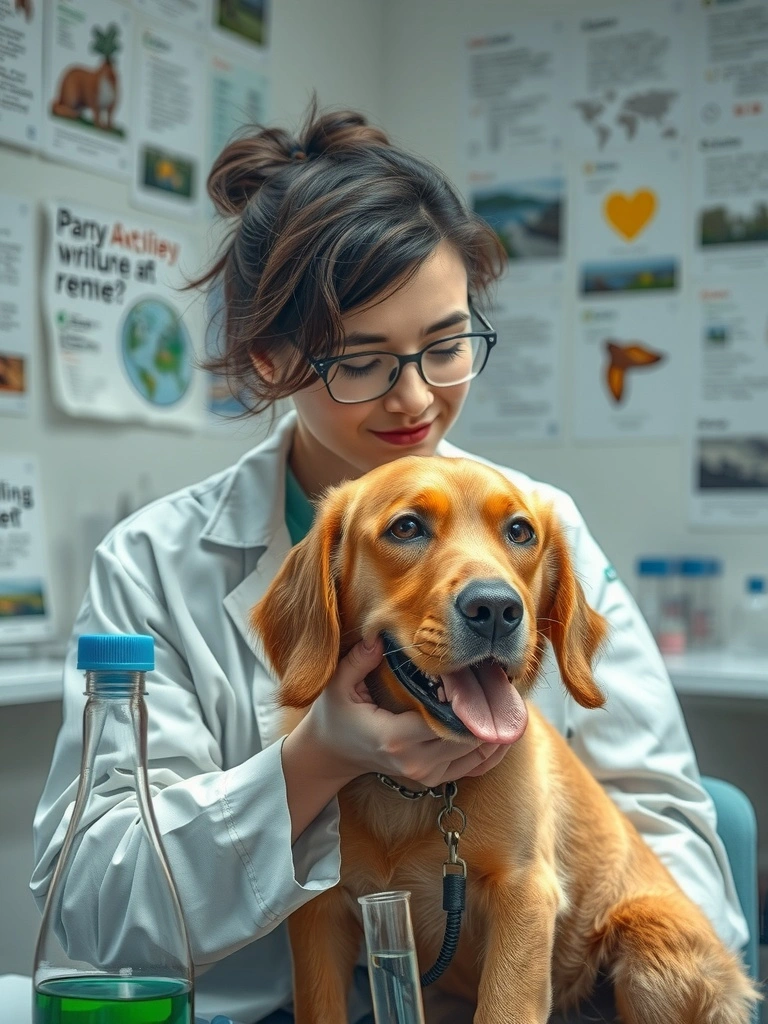
Walking into a bright and tidy laboratory, the first thing that catches the eye is not shelves of chemical reagents or researchers in white lab coats, but rather a warm and unique scene: a charming dog wearing a vibrant red collar wagging its tail as it moves around its owner’s feet. The furry companion occasionally lets out soft sounds, seemingly encouraging its owner to dive into the experiments with unwavering enthusiasm. Here, cold science and gentle companionship are hand in hand, writing an unprecedented story of a green revolution.
This experimental staff member, affectionately nicknamed "pet slave" by colleagues, has dedicated herself to the field of environmental technology development since graduating. For her, realizing an environmental vision should not be a tedious task but rather, "extending love to every corner of life"—this phrase is not only her motto but also continually resonates in her laboratory every moment. Unlike the typically solemn and serious image of a traditional laboratory, this space feels like a vibrant creative hub. Brightly colored environmental case studies adorn the white walls, ranging from waste recycling initiatives in various regions to examples of urban green energy transformation, turning it into a treasure trove of knowledge.
This “pet slave” scientist has developed a habit of bringing her beloved dog into this familiar environment every morning as soon as the laboratory doors open. The dog is indifferent to the cold instruments but wholeheartedly enjoys the small blanket prepared for it under the experiment table, occasionally tilting its head in curious observation of the seemingly esoteric yet meaningful green experiments conducted by its owner. Whenever the owner encounters a bottleneck, the dog reliably comes over, offering silent companionship to relieve the tension.
Such a unique experimental atmosphere has already gained fame in the environmental research and development circle. Many industry partners and young interns often joke during visits, "This is the most home-like laboratory, and the warmest place for knowledge." The unique interactions between humans and pets add a touch of humanity amidst the rigorous professionalism, and this warmth is the greatest motivation for the ongoing environmental cause.
Diverse Cases Inspire Environmental Practices: Dialogues Between the Past and the Future
On the wall of the laboratory, lined with what resembles a waterfall of information, are countless materials from an environmental case study database. Each case vividly and meticulously illustrates how related regions promote energy-saving and low-carbon actions in everyday life. For instance, a community's resource recycling team turns waste into art installations, creating a hub for environmental education that involves all citizens; or a town transforms food waste into organic fertilizers through fermentation, which is used for local crop planting, reducing waste while promoting the sustainable spirit of food circulation.
This researcher believes that each case is like a green seed, taking root and sprouting from the text and images in the database, prompting those involved to ponder: "How does our small effort contribute to a key step in the global ecosystem?" She paces in front of the wall with her dog, contemplating whether her future research might also become a new page in the case studies of some environmental advocate.
In recent years, this laboratory has continually sought a balance between innovation and practice, particularly focusing on the topics of "circular economy" and "efficient resource recycling." From home-level formulations of environmentally friendly cleaners to re-manufacturing processes for office paper waste, the experimental team always sets clear goals and utilizes systematic steps for verification.
Detailed Process Design: Deploying Environmental Innovations
Today's environmental experiment focuses on eco-friendly alternatives for household cleaners. The owner explains: "In the past, most commercial cleaners contained harmful chemical ingredients, such as phosphates, surfactants, or antibacterial agents, which can easily disrupt the ecological balance if they inadvertently flow into rivers and soil. Therefore, we are trying to develop a biodegradable, non-polluting new cleaner using natural citrus peels, apple vinegar, and baking soda."
The trial for each eco-friendly formula is a meticulous process. First, various natural materials must be cleaned thoroughly to ensure no extraneous impurities. Next, the proportions are mixed based on their respective pH values, followed by repeated stirring and resting for several hours to observe chemical reactions. During this process, researchers must continuously control the temperature and keep dynamic records to ensure each batch meets usable standards.
A special "pet safety testing" sub-section is set up during testing. Since household eco-friendly products often need to be in contact with spaces shared by pets for extended periods, the team intentionally simulates an environment using the cleaner on the legs of the experiment tables and on the ground to observe whether the dog exhibits any unusual behavior or adverse reactions, ensuring the product meets the health needs of pets right from the source.
The owner meticulously records data throughout, her fingers dancing between notepads and tablets, while the dog either lies or stands nearby, occasionally nudging the small glass bottles filled with samples with its nose, curiously sniffing the natural aromas. During the wait for data verification, the owner sneakily strokes the dog’s ears, both seemingly communicating their anticipation for success through body language.
Intertwining Technology and Emotion: The Touching Story Behind the Experiments
Although the daily experimental process is rigorous, it becomes rich and interesting due to the dog’s companionship. The originally tedious numerical comparison process hides scenes of warmth. Once, when the tired owner was immersed in data review late at night, she suddenly noticed her furry companion had brought her the experiment notebook, as if to remind her to take a break. "This kind of companionship transcends words, just like nature gently encouraging us to continue caring for the next generation," she remarked.
Pets are not merely one-way emotional supports; their innate sensitivity provides new perspectives in the laboratory. "Actually, sometimes my dog's reactions inspire me. For example, if it is particularly sensitive or averse to certain scents, that serves as an objective basis for judging whether environmental products are too stimulating."
In the current landscape of widespread environmental policy promotion, the daily interactions between humans and pets in this laboratory can be seen as the best example of practicing sustainable development concepts. It goes beyond simple scientific research to encompass a comprehensive consideration of friendly coexistence between humans and animals, and extending from the laboratory to every household.
Each case on the case study wall not only showcases green technology and knowledge but also reminds everyone who enters this space: every small effort is a spark of hope for change. The owner often reviews cases during morning meetings, discussing their innovative aspects and guiding the team to apply them flexibly to their research topics, even inviting industry and academic experts to explore possibilities for cross-disciplinary cooperation.
Creating a Warm Atmosphere to Shape the Spirit of Science
During the interview, the owner shared, "Science is rigorous, but the interaction between humans and pets makes it accessible and relatable." She believes that only by bringing emotional experiences into work can we inspire more cross-disciplinary and cross-generational sustainable thoughts and creative actions. On the table lies a toy model gifted by a colleague, emblazoned with the slogan "Green is the New Black," serving as a constant reminder for everyone to keep environmental commitment at heart.
Moreover, it is worth mentioning that the experimental team frequently holds "shared lunch meetings," where each member brings environmentally friendly containers to enjoy healthy salads made from leftover experiment ingredients together. The dog becomes the star of the event, occasionally smartly picking up napkins to wipe the sweat from the busy owner's brow, filling the atmosphere with light-hearted laughter.
Professional Perspectives Discussing How Case Studies Propel Change
The innovative model of this laboratory has attracted the attention of multiple academic institutions. Experts believe that balancing scientific rigor with human warmth can lower psychological barriers during the development of environmental technologies and attract more people to participate. In fact, "integrating environmental practices into daily life and linking them to emotional aspects" is gradually becoming an important strategy for transforming today's society. It helps break down the public's sense of alienation from science and promotes knowledge dissemination and practical implementation.
Market surveys also confirm that under a warm promotional atmosphere, eco-friendly products and initiatives are more likely to gain consumer trust. Notably, small and medium-sized enterprises and homemakers are emerging as new sources of green productivity, bringing homemade cleaners and natural dyes back to their households and forming a new wave of micro-circular economy movements.
This story of professional experiments shared between humans and pets is quietly changing the traditional landscape of environmental technology and infusing different emotional warmth into knowledge dissemination. In the future, the team hopes to extend this innovation and warmth to more fields—such as green campuses, community associations, and even training courses for social enterprises—where "pet slaves" and their furry companions will be seen both in the spotlight and behind the scenes, using expertise and love to open a new green chapter for the next generation.
Finally, the owner envisions: "Everyone can become a guardian of the environment, and every dog can serve as a miniature ambassador of the green revolution." At this moment, the pet lets out a low growl in agreement, and amidst the colorful play of light and shadow, professionalism and warmth intertwine, creating the most beautiful scene in this futuristically overflowing laboratory—humans, technology, and nature, all together protecting this shared blue-green planet.