
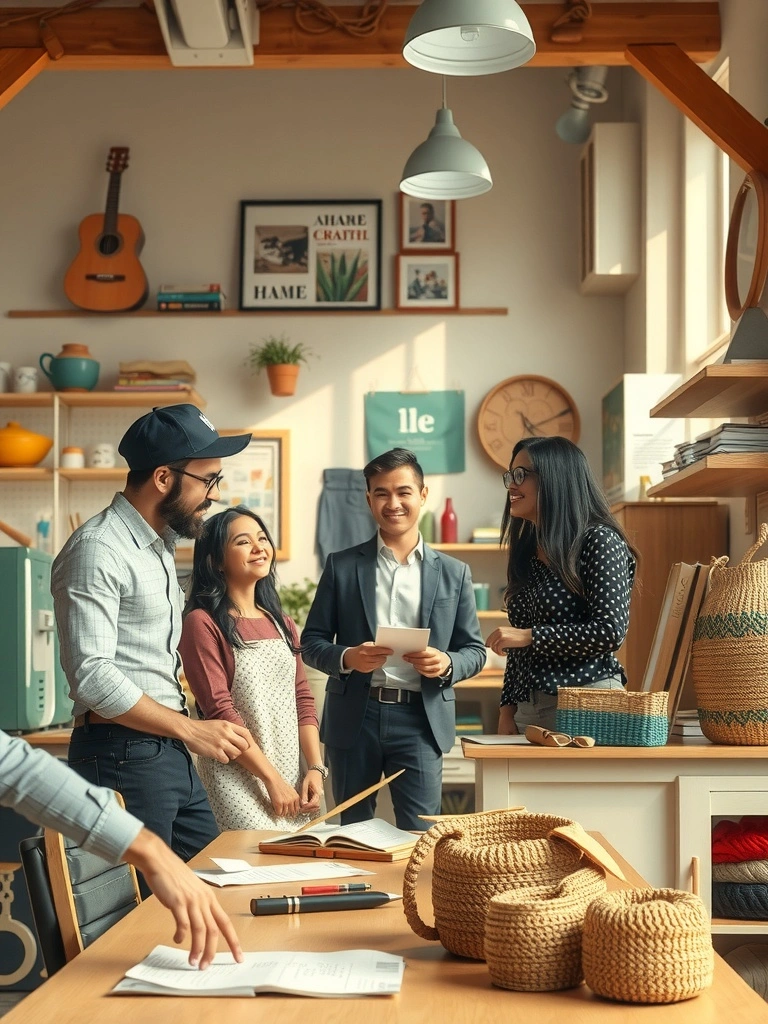
The afternoon sunlight lazily streamed through the large floor-to-ceiling windows, casting a warm golden glow over a cozy, softly-colored handmade classroom. This space, once known for its craft activities, now pulsed with a different kind of heat and vitality. The tables were already cleared of glue and scissors, replaced instead with an array of notebooks, coffee cups, laptops, and a group of bright-eyed young men and women. They sat in a circle discussing a topic that was not traditional art techniques but rather how to revitalize the handmade classroom, unveiling a new commercial brilliance—an intense brainstorming session on "Handmade Brand Marketing Strategies" was underway.
The atmosphere was oddly infused with professionalism and warmth. The young people alternated between serious note-taking and hearty laughter, as though every spark of inspiration was like small fireworks on a battlefield. Many among them possessed backgrounds in marketing and design, while others were creators simply passionate about handmade crafts. Compared to a cold, sterile conference room, this environment encouraged more creative flow. In one corner, the students’ recent stress-relief handmade products were quietly displayed—woven yarn coasters, essential oil candles, and mini potted plants—each accompanied by thoughtful descriptions explaining the ideas behind the designs. Many participants noted that these creations not only provided healing but also served as the best ambassadors for promoting the handmade courses.
Today's meeting was divided into three main topics: "The Art of Social Media Management," "Content Marketing and Experiential Promotion," and "Differentiation for Handmade Brands." The organizers had prepared an agenda to ensure participants could share and discuss in an orderly manner. The first topic introduced was social media management. A young man in a denim shirt humorously opened with, "We must first admit that social media is a show-off platform; if you’re not eye-catching, you get drowned out. So, we need to make our handmade products look more tempting than French pastries."
Phase One: The Magic in the Lens
The discussion quickly gained momentum, focusing on photography and content production techniques. Someone shared that every product must be shot in natural light, with warm backgrounds to create a "happy home life" atmosphere. Another girl added, "Short videos are on the rise, and creating tutorial clips from 'production process', 'detail close-ups', to 'sense of achievement in the finished product' cannot be missed, because fans love that authentic and healing feeling of the process." She also suggested having a regular "Weekend Handmade Day" live stream, allowing community followers to participate, fostering closeness through comments and questions.
As they discussed marketing content, more creative ideas began to emerge. For instance, someone proposed designing a challenge series themed on "Stress-Relief Lifestyle Products," inviting students to share their personal works, with regular voting on the official account for the "Most Stress-Relieving Creation," which would earn discounts or opportunities for interviews. Such interactions would not only boost engagement but also imbue the products with narrative and warmth.
Phase Two: The Power of Content Marketing
"Marketing is not just selling products; it's selling a lifestyle experience." This was emphasized repeatedly by a marketing planner. They discussed how to incorporate the stories behind handmade crafts to convey brand personality. One member suggested interviewing students of different ages, allowing them to share their personal journeys in the handmade courses—whether for stress relief, finding focus in life, or bonding with family—these firsthand stories would become warm and touching content that resonates with potential customers.
Content distribution strategies also became a focal point. One group advocated using diverse methods such as blog articles, podcasts, and short films to package the same theme into a series of content, increasing exposure frequency and brand depth. Someone further suggested, "We could invite psychologists and social media experts to collaborate, analyzing the benefits of handmade habits from the perspectives of mental health and time management, and design online stress-relief live events incorporating real-time interaction, with small gift giveaways during each session to boost viewership and fan loyalty."
A girl with a background in art therapy gave an example: "During the pandemic, many found a sense of order in life through handmade crafts. Deeply exploring these life changes not only shapes brand value but also transforms handmade products from mere items into a form of spiritual companionship."
Phase Three: Brand Differentiation and Future Outlook
"How do we stand out among the numerous handmade brands in the market?" posed the youngest fellow at the round table with this sharp question. For a moment, the classroom fell into thoughtful silence. Until a girl majoring in design thinking slowly spoke up: "Can we fully explore the stress-relief theme? Behind every product, we could combine a moment of mindfulness or small emotional adjustment tips, or even design DIY kits paired with healing music. What we sell is not just a DIY workshop, but a complete emotional healing experience."
As soon as this proposal was made, everyone eagerly agreed, brainstorming various extended services—from reservation-based stress-relief workshops to corporate stress release group courses, even designing a "Handmade Healing Kit" monthly subscription service that sends different themed crafting materials and instructional videos each month. More creative members suggested collaborating with cafes and yoga studios to host "Body and Mind Healing Days," giving more urban professionals a chance to immerse themselves in the calming power of handmade crafts.
There were also discussions on how to use stress relief as the core value for an annual brand declaration, including sending handmade gifts on members’ birthdays and organizing online celebration activities to enhance user engagement. In addition to operating a fixed venue, the handmade classroom could plan "touring pop-up events" to expand into schools, markets, and even business districts, bringing a healing atmosphere to more people. These strategies not only help to differentiate the brand image but could also spark a new wave of urban stress relief trends.
An Exciting Conclusion to a Brainstorming Session
As dusk approached, the discussion began to wind down. The students gathered their meeting notes, reflecting on the roles they could play. Some expressed their willingness to become brand ambassadors, sharing their learning journeys on social media; designers sketched new logos centered around the stress-relief theme and proposed voting on the most representative brand visual symbol at the next workshop.
The organizing team demonstrated professionalism, emphasizing the need to continue hosting various themed creative salons in the future, ensuring every member has the opportunity to participate in brand building and marketing practices, thereby cultivating a group of talents that understand both handmade crafts and business operations. They plan to invite more industry experts for in-depth lectures and exchanges, enhancing the overall teaching and operational levels.
This gathering centered on handmade crafts unexpectedly linked creativity, professionalism, warmth, and healing. In this pressure-filled city, who would have thought that an unassuming handmade classroom was quietly nurturing a marketing revolution that ignites healing and creativity? Amid the professional atmosphere, laughter and joy were ever-present, while the stress-relief products continued to protect the hearts of each participant. In the future, this classroom will continue to open the healing window in many hearts through creativity, warmth, and professionalism.