
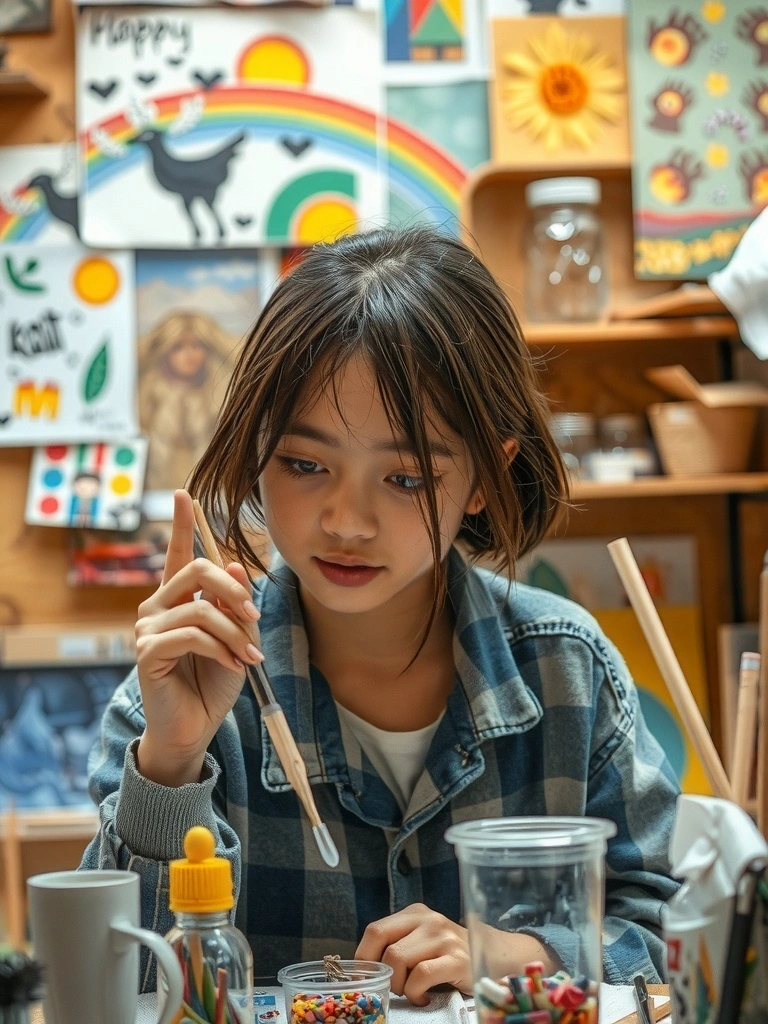
Walking into this artist's studio, the first thing that catches the eye is a vibrant and creatively sculpted space, seemingly shaped by the passage of time. Despite the simple decor and compact size, it is filled with warmth and vitality. This place is not only a hub for artistic experimentation but also resembles an incubator for various old items to be reborn anew. The walls and shelves are adorned with handmade artworks of varying sizes, including murals made from bottle caps, sculptures woven from discarded plastic bags, and a three-dimensional zoo created from waste paper and clay. Behind each piece lies a deep concern for the environment and an ultimate pursuit of creativity.
The artist herself is of short stature, always dressed in plain cotton and linen clothing, wearing patched canvas shoes, with fingers stained with various colors of paint. She mutters, "The essence of eco-friendly creativity is never about how expensive the materials are, but how many new possibilities they can be given in everyday life." This belief is evident in her studio layout and her creative process.
In her modest studio, boxes filled with recyclable materials are stacked by the window, containing a wide array of items: plastic bottles, milk cartons, scraps of fabric, newspapers, aluminum cans, shoelaces, broken tiles, old CDs, and even parts from discarded toys. These objects, which were about to be thrown away, are transformed by her skilled hands into innovative artworks. For example, a small table made from recycled wooden boards sits in one corner, topped with an installation titled "Wheel of Time"—dozens of old CDs painted to cover scratches, arranged in a circular spiral along with discarded toy gears, allowing sunlight to penetrate and shimmering with a rainbow glow. A small chair next to the table is constructed from two broken buckets and several tying strips, capable of supporting the weight of an adult, blending utility and aesthetics.
The artist's mastery over recycled materials is astonishing. Not only does she break creative boundaries, but she also fully embodies the concept of saving money. "There are increasingly high prices for art materials in the market, making them difficult for the general public to afford. In fact, the discarded objects we see around us are the best raw materials—free and they relieve pressure on the planet." Her works and creative philosophy attract waves of environmental enthusiasts, teachers, and students who come to visit and learn.
Participants are amazed at how tightly art and environmentalism can be integrated in this humble space. Many of the larger works are the result of "crowdsourcing"—neighbors and friends voluntarily providing recycled materials, even labeling them with notes like "This is the yogurt cup from our little Mei" or "These are the shoelaces from upstairs Uncle." The artwork seems to gather the memories and daily details of many, strengthening community ties. The artist laughs and says, "Sometimes, the stories behind these little items are even more touching than the final products."
Moreover, she is adept at making the production process open and transparent, especially through live-streaming her creations on social media. During these streams, she explains in detail her selection of materials, cutting, piecing, and securing methods. For instance, in creating a clay sculpture from waste paper, she first soaks newspapers in water, adds her homemade glue, patiently molds the material, and uses old toothbrushes and discarded spoons as tools, shaping the details as it dries partially. These "recipes" are shared openly with interested individuals, teaching them step by step how to find inspiration from everyday clutter and put it into practice.
She emphasizes that cost-effective creation does not mean sacrificing quality; rather, it can stimulate the limits of a creator's imagination and manual skills. Many are surprised to find that with just a bit of creativity and effort, the "trash" in their hands can transform into unique furniture, decorative items, or even exhibition-quality artworks. For example, a vase made from three plastic bottles, uniquely adhered and decorated, appears jewel-toned and sparkles under sunlight; a row of windmill decorations folded from old newspapers sways in the breeze, turning a corner of the studio into a joyful little world. These works remind people that the trivial items they discard daily actually contain infinite creative potential.
It is worth noting that this artist's environmental experiments extend beyond indoor examples. She regularly hosts open workshops, inviting community residents, families, and school groups to "play with waste," allowing both adults and children to experience the joy of hands-on creation and the spirit of environmentalism. The workshop courses are thoughtfully designed, transforming plastic bottles into birdhouses, assembling hangers into table lamps, folding cardboard boxes into piggy banks, and using agricultural waste like fruit peels and coconut fiber to create decorative art. Participants report that not only is it cost-effective, but it also helps strengthen familial and neighborly bonds. "The kids often find the process of making things more enjoyable than the finished product, their eyes lighting up at the transformation of waste," shared one parent.
Her continuous creative experiments and open sharing have caught the attention of many educators. Schools have invited her to serve as a course advisor to promote sustainable environmental education. "If creativity can influence the next generation, it will become a force for protecting the planet," she encourages students to start with small actions, learn to utilize resources, enjoy hands-on activities, and develop teamwork and problem-solving skills. Feedback from the educational field has further strengthened her belief in the importance of ongoing promotion.
In today's context of minimalism and decluttering trends, she advocates for "rediscovering forgotten beauty"—not discarding everything but giving each item a second life. Her artistic creations are the best interpretation of this philosophy. Beyond aesthetics and creativity, the works reflect the values of reflecting on consumption and protecting the Earth. With each completed piece, she writes a simple story for it, documenting its journey from abandonment to rebirth, allowing each viewer to see the stories behind the materials.
In recent years, this artist's insights and creative practices on environmentalism have garnered increasing attention and admiration. In interviews, she has stated that her greatest sense of accomplishment comes not from how many pieces she sells but when students, families, or other creators develop her model, turning eco-art into a part of community life. "What makes me happiest is seeing everyone starting to take action, willing to think creatively and use resources wisely, no longer seeing crafts as something difficult."
Looking to the future, she expressed her hope for more like-minded partners to join in promoting creative environmental endeavors, rediscovering the value of waste in urban corners and everyday life. Perhaps in the near future, the terms "trash" and "art," which seem opposed, will find a way to merge in everyone's life.
Summarizing this artist's concrete practice of innovation and perseverance, it is not just a revolution about saving money and being eco-friendly; it is an attitude toward life that empowers people to courageously examine their own ways of living, sparks imagination, and prompts action. Her humble studio has become an oasis in the urban jungle, leading more people to rethink the profound relationship between waste and creativity. The next time you pick up a bottle or bag you are about to throw away, you might recall that simple studio around the corner, where every inconspicuous little thing actually contains a beautiful story that can continue, be shared, and change the world.