
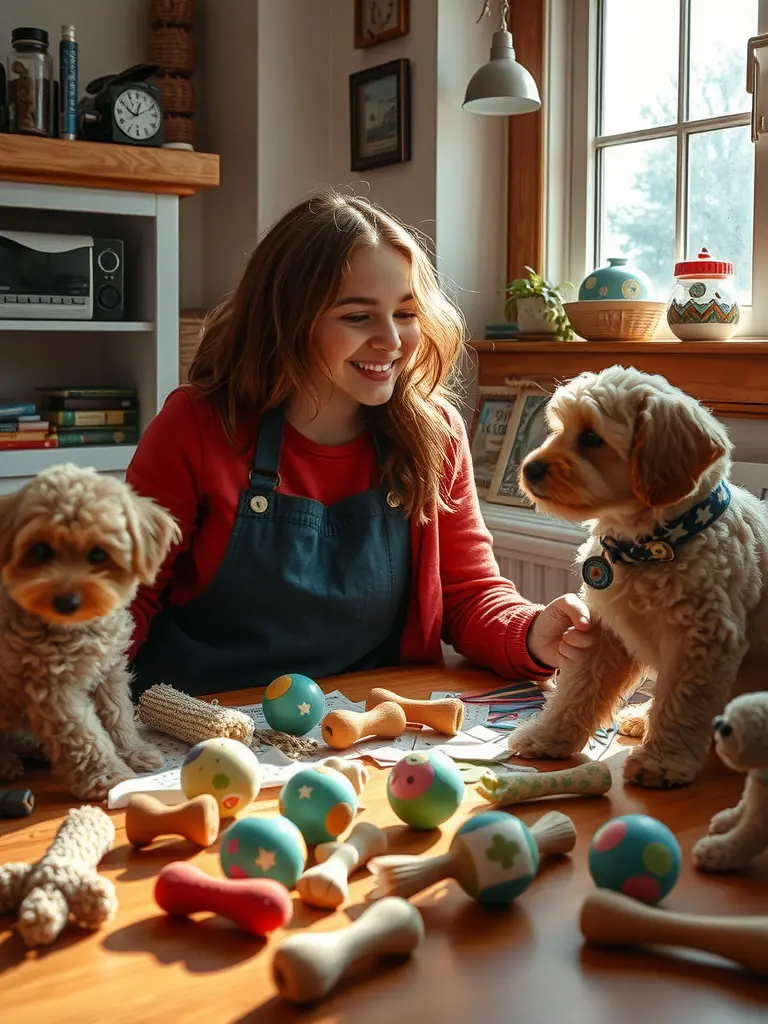
The room is filled with the scent of coffee and dried flowers, with morning sunlight slanting down under the window, warming a wooden table. A young craft enthusiast is focused on a pile of colorful fabrics and yarn, her nimble hands skillfully tying a piece of pink cotton rope into a knot. Scattered across the table are small buttons, ribbons, a few bells, and bundles of freshly unwrapped patterned fabric. Beside her, a plump orange cat affectionately rubs against her, its pair of black eyes intently following her fingers, expressing great curiosity about the new toy that is about to be born.
This cozy little family is interpreting the joy and value of handmade pet supplies in the most intimate way. The interaction between pets and humans does not require expensive purchases; it only needs a little creativity and careful thought, transforming every corner of the home into a happy practice ground. Recently, more and more pet owners are beginning to share their experiences of making pet toys, creating a wave on social media platforms. Some pets show no interest in high-priced toys but are instead captivated by the handmade gifts from their owners. This happiness, easily replicated in every household, is quietly rewriting the everyday wisdom of urban pet ownership. Today, we will follow in the footsteps of this crafting expert to see how she connects love and creativity with her hands, as well as share a set of pet care strategies that will lighten the burden on our wallets.
Handmade toys are born on a warm table.
This small dining table helps this pet owner bring countless novel little items to life. The morning sunlight adds a dreamy atmosphere to this workshop-like corner as she first selects a piece of apple-green cotton fabric and cuts it into two circles. Then, she picks up a brown embroidery thread to sew fun dots on the fabric, giving temperature and soul to the pet's toy. The nearby cat appears indifferent but is actually watching intently, seemingly plotting strategies to snatch the new toy once it arrives.
The process of making handmade pet toys is not complex but requires attention to detail. The first step is selecting materials, ensuring that the fabric and accessories are safe, non-toxic, and easy to clean. Most crafters recommend high-quality cotton, combined with wool felt and pure cotton yarn, which are not only durable but also pleasant to chew on. Sewing is another skill; stitching involves both decoration with visible thread and ensuring that the inner fabric covers the sturdy seam. If you want the toy to make sounds, recycling old plastic bottle caps or empty soap boxes can be an eco-friendly twist.
As she sews, she softly interacts with her pet. Each time the needle picks the fabric, producing a "crunch" sound, the orange cat reaches out its paw to try to touch the needle and thread. This intimate and warm interaction nourishes the pet's curiosity and brings them closer together. As a soft "leaf pillow" slowly takes shape, she adds some imported catnip powder and sews eleven fine tassels onto one end, completing a special gift just for her cat.
Real ways to save money while raising pets, blending creativity and practicality.
When it comes to saving money on pet care, there are many little tips hidden everywhere. "In fact, many materials can be recycled or reused," says this crafty mom while pointing to a small cardboard box in one corner of the table. It is filled with previously discarded plastic rings from milk cartons, the ties from packaging, and faded old cotton T-shirts. After being cleaned and sanitized, these items, which might have ended up in the trash, give new life to toys.
Some of the pets' favorites are actually scraps of their owners' old clothes. The owner's scent gives the pet a sense of security, deepening their bond as they chew and cuddle. By cutting the sleeves off an old cotton T-shirt, stuffing it with some old sock filling, sewing the ends securely, and adding colorful buttons or bells that attract the pet, a rattling chew toy can be made. If there are overactive puppies at home, a durable tug toy can be made of rough hemp rope knotted together, promoting chewing strength while allowing for exercise through interaction with the owner.
Beyond toys, feeding and daily items can also benefit from creative thinking to save money. For example, many people use leftover scraps or old towels to cut and sew reusable bath gloves and pet mats. An unused comforter from last season, once cleaned and dried, topped with a colorful fabric cover, becomes a cozy pet bed for autumn and winter.
Craft enthusiasts share: "In fact, we have many readily available materials around us; with a little creativity, we can really save a lot of money. Not only does this reduce waste, but it also often brings freshness to our pets at home."
Handmade initiatives are not just money-saving tricks; they are bridges of family emotion.
Every time she completes a new piece, the most anticipated moment is inviting her pet to "test" it out. At this moment, one corner of the dining table suddenly becomes lively, as the orange cat rushes in, rolling the "leaf pillow" around in its arms. The owner sometimes deliberately hides part of the toy and interacts with the cat in a playful chase, filling the room with laughter. This sense of ritual, exclusive to the family, turns simple little objects into emotional bridges.
Moreover, the crafting process can also encourage the whole family to participate together. On weekends, parents and children work together, with some responsible for sewing, others for stuffing cotton, while the children pick out the colors for the buttons. Sitting at the dining table, the family discusses seriously, "Does the little fish shape need a tail?" "Should we give it a hat?" These conversations root the warmth of home in each moment of creation.
In such daily life, crafting becomes a silent companionship among family members. Although pets cannot speak, they "return" every effort through their movements and expressions, as the small toys create a delicate happiness in their tender bites.
Professional advice: The golden rules of selecting materials and safety.
Although crafting brings joy and freshness to pets while saving owners quite a bit, experts remind us to adhere to some golden rules before getting hands-on. First, all materials must be confirmed as non-toxic and hypoallergenic, avoiding small parts that could fall off or be easily ingested by pets, creating hazards. It is recommended to use pure cotton fabric and medical-grade cotton as stuffing and to regularly check the seams of the toys, repairing or discarding any that are damaged promptly.
Secondly, for cats, a small amount of natural stimulants like catnip or silver vine can be mixed in to enhance attractiveness, but care must be taken in measuring the amount to avoid overstimulation or allergies. For dogs, it is best to avoid rubber products and to select chew- and wash-friendly rough hemp rope or pure cotton materials. Handcrafted toys should be cleaned and sanitized regularly to prevent dirt accumulation that could endanger health.
Multi-functional little treasures for economical pet ownership.
Facing the numerous and varying expenses of pet ownership, crafting enthusiasts have a multi-functional item recommended for fellow enthusiasts: a patchwork fabric snack bag that can transform into a carrying bag for outings, a storage for snacks, or even a reward tool during pet training for different occasions. This ingenious product, combining handmade elements with practicality, can be sewn together from various scraps, creating an eye-catching and unique design.
Additionally, some pet owners share that leftover cardboard boxes can transform into mini tunnels or jumping playgrounds, using scissors and tape to create multiple crossing holes. This not only encourages pets to exercise and explore but also resolves the challenge of limited space in urban homes.
A loving home, where every detail is warm and perfect.
From homemade pet toys extending to the overall family atmosphere, the culture of crafting is also promoting a new way of thinking about home. Within limited spaces, pet owners design exclusive corners for their pets. For instance, stacking recycled wooden boxes to create a pet staircase, or crafting a sun hammock from discarded fabric by the window. Such partial modifications are not only feasible but also adaptable to changes in home decor.
When the sunlight shines onto the windowsill, it allows the cat to comfortably curl up and enjoy a warm sunbath. Together with their pet, the owner might be reading crafting books or documenting little snippets of daily life on the table. This house filled with gentleness and stability becomes a rare slow moment amidst the fast-paced city life.
In conclusion: A home with pets and limitless creativity.
As the touching stories of crafting enthusiasts interacting with their furry friends are shared across communities, the culture of handmade pet supplies in warm homes is rising against the trend. Crafting is not merely a money-saving strategy but a fluid movement of affection and creativity, where every stitch and every unique little object contains profound family feelings. Minimal materials, recycling and rebuilding, combined with meticulous care and rich imagination, not only infuse warmth into homes and bring families and pets closer in daily life but also inspire more people to bravely experience the joy of creating their own life.
When the next sunny morning arrives, that slightly messy dining table will still have scattered materials for sewing, and the pets will once again be snuggling around their owner, the family’s crafting game likely still underway. If love is an accumulation of habits, then these warm self-made days are truly the best kind of everyday life.