
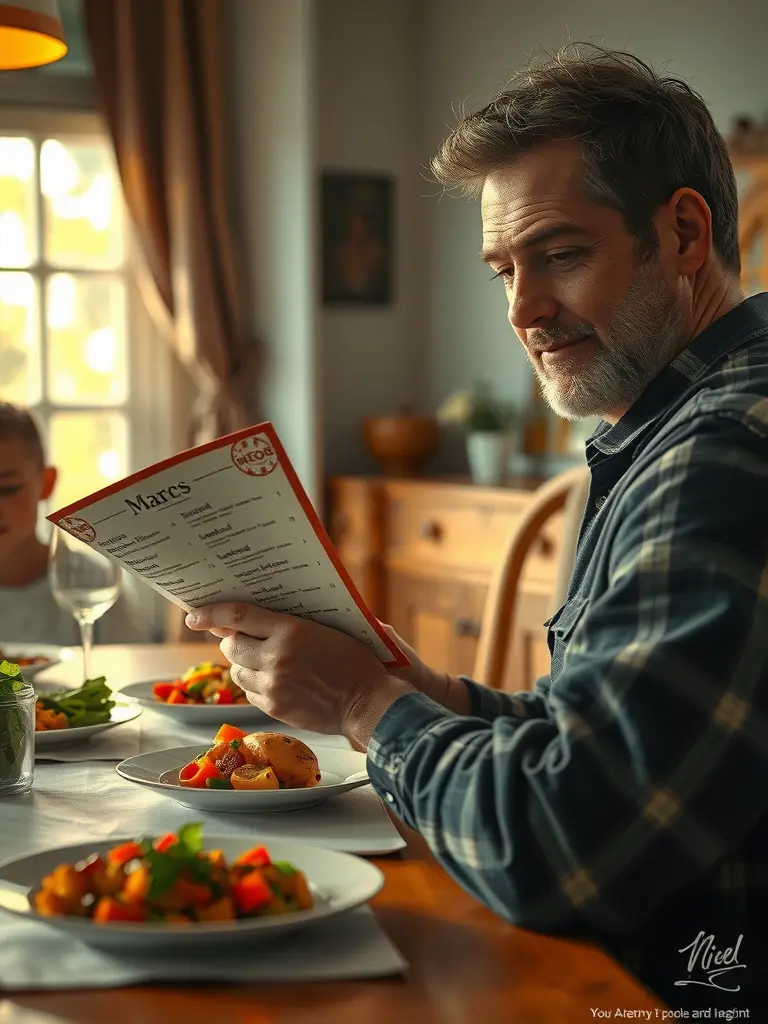
Every holiday morning, the sunlight gently spills onto the wooden floors of the living room and dining room, bringing warmth to the entire space. On such a fresh morning, a warm feast that gathers family emotions quietly brews in a father's heart. Unlike previous ordinary holidays, this time he does not casually order from a delivery platform or simply fry a few seasonal home-cooked dishes. Instead, he carefully sits at the dining table—meant for sharing joyful moments—with a thick stack of food lists in hand, his eyes shining with delight and anticipation.
This food list not only records a few dish names but also embodies the wisdom that the father has gathered over the years by observing each family member's dietary preferences. Some items include the pan-fried turnip cake that his wife has cherished since childhood, the butter baked shrimp that his son loves the most, and the daughter’s adorable insistence on keeping a few sweet green beans hidden in the char siu puffs she enjoyed as a child. Each record reflects the warmth of home.
Planning the dishes is not merely about choosing a quantity sufficient to fill everyone's stomach. This father understands that wonderful dishes embody the family's cohesion. As he allocates space on the dining table, he evaluates each dish's nutritional content and cooking difficulty, based on every family member's health needs and taste preferences. He even uses colored pens to annotate the menu, marking which dishes allow his wife to participate in flower arranging while leisurely preparing, and which are suitable for the children to help wash and cut, emphasizing collaboration and turning cooking into a fun family game.
Behind this food planning lies not only deep emotions for the family but also detailed care for their dietary health. The night before planning, he thoroughly researched a wealth of information, from the nutritional components of various ingredients, tips for making homemade sauces to reduce salt, to various cooking methods that reduce oil without sacrificing flavor—combining health and deliciousness became one of his important principles. As he gazes at each family member sitting across from him, he hopes that this meal will bring a sense of belonging to each soul at the table.
The morning light is warm and bright, shining into a corner of the kitchen, where his wife ignites a cheerful atmosphere for the unfolding family feast. The father lays a soft-colored tablecloth on the dining table, sparking the family’s curiosity about the contents of the list. The children excitedly gather around him, some eagerly discussing whether to add a dish of honey chicken wings, while others bargain to swap the sweet soup for their favorite red bean sesame paste. The mother smiles and suggests letting the children get used to healthier, low-sugar options, while the father calmly and firmly tells everyone, "Of course, we can add a few more dishes, but we still need to keep it balanced—how about adding a vegetable salad?"
In this subtle negotiation, emotional understanding and the warmth of family flow invisibly. The father fully respects each family member's opinion while skillfully correcting the children's overly biased tastes. He contemplates whether the requests for less sugar and salt might compromise the deliciousness of traditional dishes. In the end, he decides to use steaming instead of frying and replace part of the sugar and fat in the sauce with fresh fruit puree. This innovation and compromise turn each dish into a small representation of family harmony.
In the afternoon, the preparation officially begins. The father acts as the conductor, meticulously assigning each task. He personally handles the more challenging main dish, such as the low-temperature slow-cooked lemon chicken breast, tender and juicy yet not lacking in texture. He assigns the simple but crucial task of blanching green beans to his son, training the child’s hands-on skills and concentration in a relaxed atmosphere. The daughter is designated to practice mixing the salad dressing, swirling a wooden spoon to create beautiful arcs, masterfully combining olive oil, yogurt, and lemon juice, and sprinkling crushed walnuts and raisins to enhance the flavor. This also teaches her that a rich diet goes beyond color and aroma; it involves thought and creativity.
At this moment, the kitchen transforms from a place where parents run around for their children into a collaborative culinary creation project involving everyone. The afternoon sun spills in through the window, seemingly applauding the family’s hard work. The occasional sounds of the faucet, the rhythm of knives cutting vegetables, and the playful banter between siblings as they debate whose skills are better all weave together a unique family symphony, intertwined with steam and fragrant memories belonging to the home.
The table setting is anything but simple. The father leads the children to lay out placemats, arrange porcelain plates, cutlery, and even fold a few adorable napkin animals, placing a vibrant flower on each person’s plate. The mother selects some simple table decorations adorned with herbs and fruits to add a touch of ceremony to the natural atmosphere. The children place their handmade cards at each family member’s seat, inscribed with simple messages like "Thank you for having dinner with me" or "Today, I love my family the most." These gestures elevate the family gathering into a spiritual feast.
As the dishes come to the table, the scent of lemon wafts through the sliced chicken breast, the green beans are fresh and crisp, and the colorful salad is like a carefully designed work of art on every plate. The children exclaim in delight, while the mother, savoring each bite, can’t help but praise, "This is even more colorful, fragrant, and flavorful than the restaurant!" The father laughs and replies, "This is all the family’s creativity; I’m just here to help with the planning." Their interactions reveal deep warmth.
During the meal, family members share small highlights from their recent lives. The mother talks about interesting things at work, the son shares tales from school competitions, and the daughter divulges little secrets about her friends. The father uses this meal to subtly impart family education, seamlessly weaving in lessons about health knowledge and the importance of food sourcing whenever the topic relates to meals, allowing the children to subconsciously develop an attitude of kindness toward their bodies and the world.
After the meal, the father leads everyone in a small ritual—each family member shares the dish that impressed them the most today, along with their reasons. The eldest son chooses the low-temperature lemon chicken, praising its fragrant tenderness and the fact that it’s not dry at all, with a hint of fruit acidity. The daughter prefers the special flavor of the salad dressing, sharing that she made it with the recommended fresh citrus from her father, resulting in an exceptionally refreshing taste. The mother’s choice falls on the classic turnip cake, cherished due to childhood memories. As for the father’s favorite, it turns out to be the lightly salted soup designed by the children. He reflects, "What’s most touching about every dish is the flavor created by the family’s collective effort; that’s the true essence of home."
The atmosphere around the lively dining table is bright and joyful, with each face appearing immersed and satisfied under the warm yellow light. After the meal, the family has also formed a new habit—cleaning the table and tidying up the kitchen together. The children rush to put the dishes into the dishwasher, while the parents take up cloths to wipe the table clean collaboratively. This half-hour, compared to a hurried professional cleaning, feels more like a leisurely family gathering. At this moment, no one rushes or complains; everyone participates voluntarily, allowing the warmth of the home to continue rising with every cleaning moment.
From the planning of the food list to the realization of each dish, from the division of tasks to the sharing at the table, and from laughter and conversation to collaborative tidying, every detail reflects the family culture that the father has carefully fostered. This culture goes beyond just one meal; it profoundly influences the children’s physical and mental development as well as the family’s values—cherishing food, healthy eating, teamwork, expressing gratitude, and appreciating happiness. These seemingly simple principles manifest genuinely during each family gathering, internalizing them into the family’s lifestyle.
On this day, the father holds the meticulously planned food list, not only sketching a colorful, fragrant, and flavorful healthy feast for the family but also nourishing everyone’s spirits in a warm, bright, and laughter-filled family atmosphere. Those seemingly small moments of everyday life unexpectedly shine with the light of happiness under his persistence and creativity. Perhaps not every family has the opportunity to gather together often, but this thoughtful care from a father might just be the most touching secret weapon that constitutes home.