
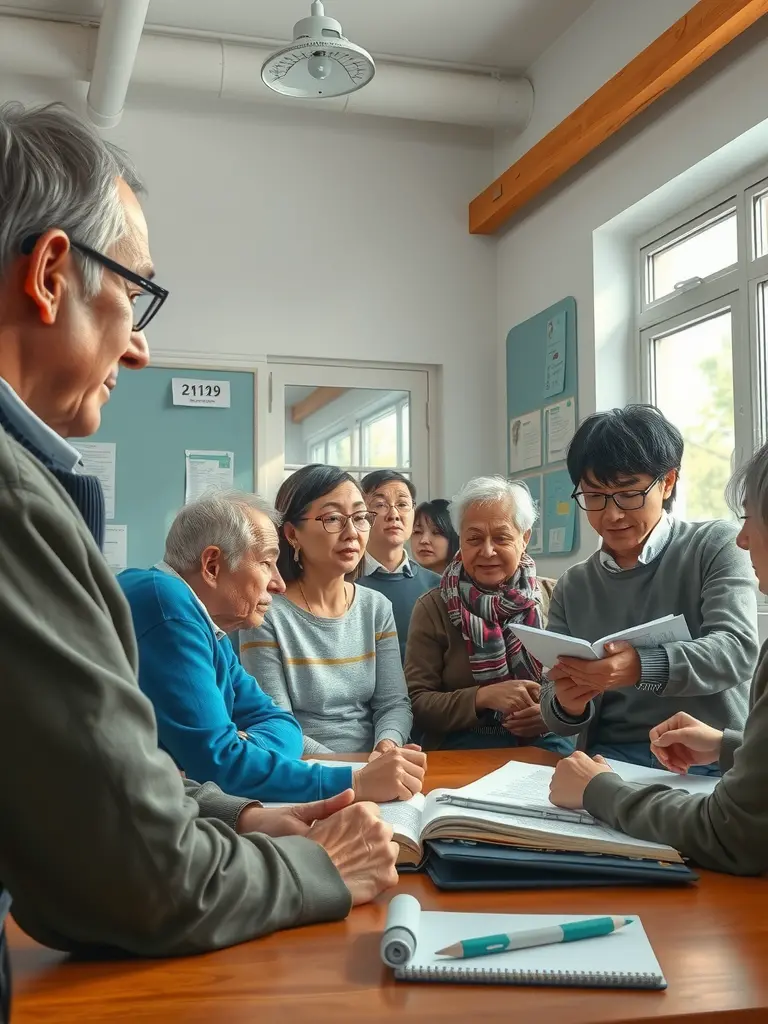
In the afternoon, sunlight streams through the clean window panes, softly illuminating an elegantly furnished study. This is not just any ordinary library corner, nor is it a modern conference space; it is a well-known community co-learning center. Rows of books are neatly arranged on birch bookshelves, while outside the glass window, a squirrel strolls by, creating a tranquil and warm daily scene. In the center of the study is a large long table, covered with newspapers, notes, notebooks, and typewriting pads; surrounding the table, a group of spirited elderly individuals engages in a feast of thought.
This is a deep seminar about language and observations of life. Unlike typical book clubs, today’s gathering revolves around the themes of "news reporting" and "language enhancement training," aimed at encouraging seniors to generate and discuss news reports. This not only provides a new stage for their rich life experiences but also, through professional teachers' guidance, trains their language sense, stimulates their minds, and enhances their language organization and communication skills.
At one side of the long table, a kindly smiling teacher gently guides everyone, saying, "Please think, if you were a news reporter, how would you write about the little story that just happened in the community? Start by writing down the details of your observations, describing the scene, characters, emotions, and background one by one." After this, the elders around the table eagerly raise their hands to respond, fostering an interactive and lively atmosphere.
"I believe the most important thing in news is to honestly present what is happening at the moment. I just saw my neighbor Ah Chang trimming roses in the garden, reciting poetry he learned in the past while carefully tending to the flowers..." An elder named Mei Hui is the first to speak. Her voice is steady, and her smile captivates everyone’s attention with her keen observation.
"Mei Hui has hit the nail on the head; the re-creation of the news scene is indeed vital. Come, everyone, you can learn from her how to make the story livelier with details," the teacher comments, handing out small cards printed with "Tips for Scene Description" for everyone to reference.
Another elder sitting by the window raises his hand to speak: "I want to remind everyone that news is not just about reporting facts; it also has to convey people's emotions. If we can include the expression on Ah Chang's face while trimming the roses, alongside the memories related to his mother, the story will gain more depth."
"Great, during our language enhancement training, we can try using metaphors and descriptions to give life to the characters’ inner worlds. This kind of writing training not only helps in making news articles vivid but also activates our brain's associative and language organizational abilities," the teacher adds.
In addition to free-speaking, the activity also includes small group discussion segments. The table is divided into two sides, where group members share interesting events they have encountered in their reading or daily lives, revolving around the four essential elements of news reporting—who, when, where, and what happened—raising questions to inspire each other. Each participant must summarize a small piece of news in one minute, while others practice asking follow-up questions or adding perspectives based on what they've heard.
In the afternoon, the seniors speak and listen, seemingly recalling memories of critiquing phenomena and writing about their times in their youth. One elder jokes about herself, "I loved writing letters when I was young; I never expected that now I can also write news articles." Another shares, "We used to hand-draw newspapers; now we can also practice our brains through oral news reporting, it’s truly interesting."
The language enhancement training is also a key focus of this activity. The teacher starts with simple oral exercises, encouraging everyone to spontaneously create stories through a "relay" method. A starting word is randomly provided by one person, and other members must continue the story, with each response requiring a new adjective or action, training their thought transitions and vocabulary application.
"A nimble little cat jumped over the windowsill, where steaming buns were laid out, and then..." Mei Hui begins. Nearby, Ah Xiong immediately continues, "It sneakily grabbed a bun and hid behind the bookshelf, savoring it."
Another participant adds, "Suddenly, there was a soft sound of footsteps in the study; who has arrived..." Laughter and applause erupt from the audience. This storytelling training not only enhances language fluency but also improves creativity and social interaction.
The activity reaches its climax with the "Simulated Real News Presentation" segment. Each group must create a news report based on the small life stories discussed earlier and present it in front of everyone. At this moment, the teacher specially arranges a mock press conference, allowing other groups to role-play as "on-site reporters" questioning the presenters. This interactive format not only trains the speakers' logical thinking but also teaches the questioners how to dissect news events and capture core messages.
"May I ask, in Ah Chang trimming roses' story, what details do you think are worth digging deeper into?" one elder inquires. "Ah Chang usually carries some books in his pocket; did he also bring that ancient poetry anthology this time?" another enthusiastically asks. The presenter cleverly responds, "Yes, that anthology has been read for many years, the corners of the book are worn and pale. He always says this book is like an old wine; every time you read it, there’s a new flavor."
Everyone present is granted the right and responsibility to speak; at times discussions become heated, even sparking differing opinions over whether a certain detail faithfully represents the scene. The teacher calmly intervenes, saying, "Everyone's observations of details may vary slightly, and that's the beauty of writing. We must learn to respect different perspectives while also attempting to gain inspiration from others' observations."
This language enhancement training also incorporates real-time feedback and positive reinforcement. Whenever someone uses new vocabulary, the teacher publicly praises them, helping the seniors gain confidence and a sense of accomplishment. "Your metaphor is very novel; using the window pane to reflect the mindset creates a vivid imagery," the teacher praises.
Not only are language skills and logic trained, but the activity also particularly designs supportive exercises aimed at emotional management and confidence building. For example, during the role-playing segment, participants simulate calmly responding to challenges face-to-face; when sharing their news observation experiences, they must also encourage others with a positive and affirming tone, fostering a positive exchange of energy within the team.
During the teaching activities, breaks are also incorporated. The elders brew hot tea and prepare homemade snacks, sharing their writing insights and life snippets with each other. The study occasionally fills with the sound of bright laughter, blending with the birds' chirping and sunlight outside, creating a warm and moving scene.
Regarding the significance of this event, the teacher particularly emphasizes, "Language is not only a tool for communication but also a bridge for us to think and understand the world. For the elderly, continuing language training helps keep the mind active, which greatly benefits their physical and mental health. Moreover, through news writing, everyone can re-examine the details of their daily lives and learn to savor life more deeply."
One elder reminisces sentimentally, "We always said life gets boring after retirement. But in these past few months of participating in co-learning activities, not only has my mind become more agile, but I’ve also made good friends. Writing news articles, discussing language, and experiencing life thoughtfully, each day feels particularly meaningful."
In fact, language enhancement training has become a trending topic in the field of elder education and cognitive health today. Professional research indicates that older adults who undergo language training and engage in writing can effectively delay cognitive decline, enhance logical reasoning abilities, and mitigate feelings of depression and isolation. Especially writing styles like news reports, which require information integration, scene reconstruction, and critical observation, play an active role in stimulating neural connections in the brain.
Before concluding the event, the elders traditionally engage in a short reflection session, each writing down "the sentence that resonated with them the most today." Some choose, "Details determine the height of a story"; others write, "Every individual’s life experience can become someone else's news," as if on paper, they render the day's deep conversations with a profound essence.
As dusk falls, the elders in the study agree to meet again next time. As they leave, several participants continue to enthusiastically discuss which news segments could be adjusted and which metaphors are more interesting, the ongoing topics infusing the path outside the study with a strong cultural atmosphere.
This language enhancement training and news reporting discussion taking place in a bright study has become not just a writing class, but also a gathering that converges life experiences into wisdom and laughter. Here, every elder has become a reporter of their own story, also becoming the most radiant voice in their small community. Flipping through their freshly written news drafts, the words reveal their love for life and that enduring curiosity and dynamism that transcends age.