
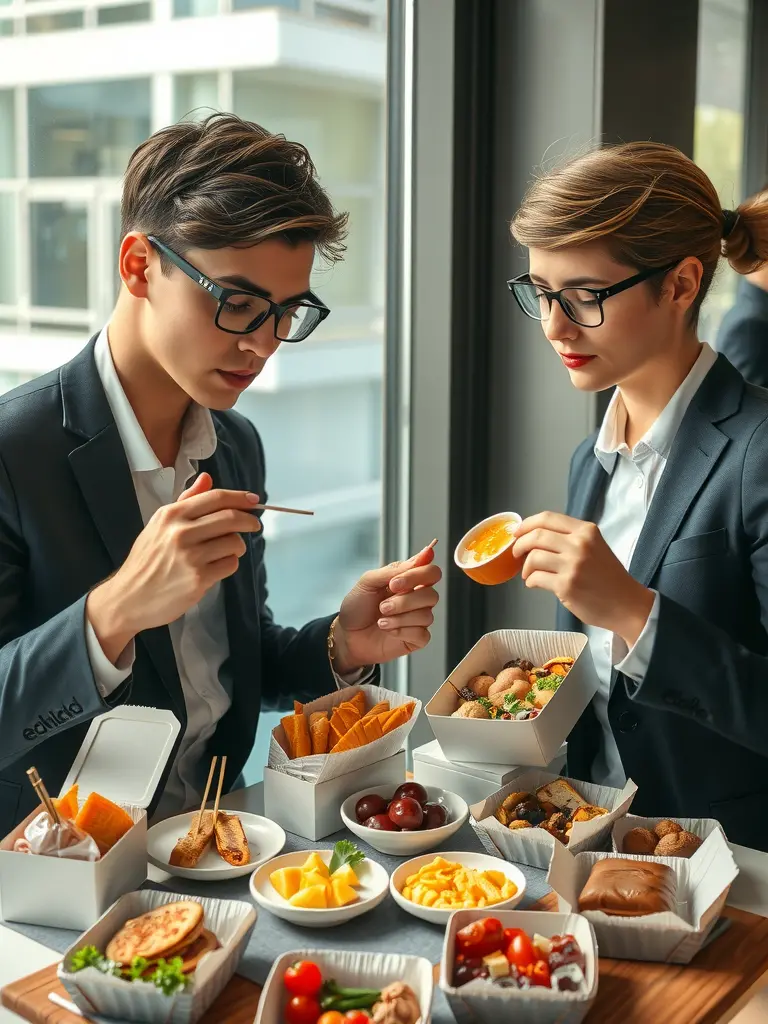
At noon, the high-rise buildings in the city buzz with office workers diligently battling away in front of their computer screens. Amidst the clatter of keyboard typing, two colleagues momentarily detach themselves from the pressures of data analysis and performance metrics to gather at the transparent floor-to-ceiling window on the fourteenth floor of their office building, sharing a mini feast for the senses. It is said that this group of culinary aficionados views their lunch boxes not merely as a way to refuel but transforms daily lunches into professional tasting sessions, sampling selections from popular restaurants, highlighted delivery platform offerings, and homemade bento boxes, igniting one of the most influential culinary discussions in the office during their leisure time.
Looking outside, the city skyline appears as a still canvas, with sunlight refracting through the glass onto the conference table, illuminating the vibrant colors of the assorted elegant lunch boxes. The neat arrangement on the table features shrimp and wild mushroom risotto, lime-roasted chicken with sweet potato puree, Japanese snowflake beef sushi box, Korean fried chicken with homemade kimchi, classic three-color vegetable salad, and a modern low-fat pan-seared sea bream bento, resembling a culinary exhibition of the flavors of life. Beside each lunch box are ceramic miso soup cups and exquisite stainless steel utensils, reflecting a contemporary office worker's respect for sensory enjoyment.
The two office workers come from the marketing and IT departments, each shining in their respective fields, now engaging in a meticulous "food tasting process" during their lunch break. Before any dish enters their mouths, it undergoes careful observation and brief discussion. "Look at this shrimp and wild mushroom risotto, the shrimp is a vibrant red and has a firm texture, the rice absorbs the broth beautifully, presenting a pearly sheen," one says while angling a fork to lift a grain of rice. "And this Korean fried chicken's sauce, despite the delivery process, still clings tightly to the chicken skin, with just the right amount of gloss." Clearly, both employees have personal insights into the color, texture, and overall aroma of the food; they not only examine each dish closely but also attempt to predict flavor complexity through smelling and gently prodding the ingredients.
When it comes to formal tasting, the two maintain a professional demeanor, consuming each dish in portions and cross-referencing flavors, seasonings, and textures. "The beef in the Japanese snowflake sushi box is thinly sliced, tender, and finely grained, with the perfect balance of fat and lean meat. The rice has a mild vinegary taste that does not overshadow the main flavor," one begins to describe their sensory impressions. "In contrast, the lime-roasted chicken bento has excellent bounce and is noticeably flavorful, with the lemon fragrance significantly enhancing the appetite; however, the sweet potato puree is a bit dense and could use more olive oil or a touch of fresh milk to lighten the texture."
Their professional analysis extends beyond taste. The two colleagues further compare the packaging design, user-friendly compartments, and portion sizes of various brands of bento boxes. The designs for food separation vary widely among brands; for instance, a well-known brand completely separates salads from the main dish to ensure the lettuce remains fresh and crisp, while some brands serve small dishes of side sauces to prevent oiliness from mingling, showcasing thoughtful design. "I noticed that this delivery service uses biodegradable and eco-friendly materials for their bento boxes, which not only are of high quality but also reflect the corporate social responsibility. In contrast, another brand, while visually appealing, lacks in sealing capability, resulting in the egg drop soup spilling during delivery, which is a slight drawback," one points out, stressing that beyond delicious food, the convenience of packaging and environmental friendliness have become key evaluation points for modern office lunch companions.
The atmosphere is bright, comfortable, yet meticulous by the window. The two flip through their notebooks, recording scores for the new items' flavors, packaging aesthetics, whether portions satiated the appetite, and the creativity of accompanying side dishes. "Like this three-color vegetable salad, which incorporates sautéed Sichuan peppercorns and homemade flaxseed oil dressing—it's both healthy and innovative; and the pan-seared sea bream has a thin, crispy skin and retains elasticity, drizzled with cold-pressed olive oil, balancing nutrition and texture—such thoughtful design truly deserves recognition." Their discussions often extend to topics like dietary health, calorie control, and fiber intake, providing office colleagues with highly informative dining suggestions, akin to a unique lunchtime academy.
A noteworthy aspect is how both employees view the act of eating bento as a catalyst for inspiration in daily life. They believe that meticulously and systematically savoring various dishes not only sharpens their taste sensitivity but also hones their ability to observe details and analyze calmly. In fact, this concept of flavor training has already circulated in some renowned corporations, advocating for sensory insights through culinary comparisons and promoting a budding workplace culture that states, "seriously enjoying lunch means seriously facing life." This culture transforms lunch from merely a hurried functional act into a life experience that nurtures creative thoughts.
After concluding their bento review, the two share amusing anecdotes related to their flavor experiences, occasionally joking to strike a perfect balance between professional discussion and casual chat. One mentioned how, after a data design competition, he tried to treat his team to a homemade chicken bento, only to find everyone clamoring to crown him the team’s "potential chef"; another humbly remarks that his "taste radar" has mistakenly misjudged the true flavor of a trendy bento several times and is still in the process of refining his tasting standards. It is this authentic and candid dialogue that imbues their lunchtime in the office with modern profession's warmth and humor.
In addition to the selected bento items for the day, the two also proactively seek out new places with good reputations and try out various dining styles. For instance, every Friday, they initiate an "International Cuisine Theme Week"—expanding taste boundaries from Hong Kong-style cha chaan teng char siu rice, Vietnamese lemongrass beef rice, Thai green curry chicken rice, to Mediterranean chickpea salads, becoming the focal point for office discussions and a bridge for social interactions. A great bento not only fills one’s stomach but embodies a nation's culture and the culmination of culinary skills, as these dedicated office workers spread creativity and topics throughout the urban workplace.
As their professional tasting insights accumulate, these two colleagues gradually become the “hidden culinary consultants” in the office; if any colleague has ordering dilemmas, they will certainly seek their opinions. "We recommend suitable meals based on the day's temperature, colleagues' health conditions, and team atmosphere. For example, with the recent humid heat, we suggest opting for sour cold dishes or vegetarian options to stimulate appetite and cool off; on days with overtime, we recommend double main course bentos or adding filling ingredients like nuts and sweet potatoes for sustained energy." The detailed care arising from workplace dining seems to mirror a supportive team culture among these diners.
Throughout the entire office space, more and more employees are influenced by this culinary professionalism trend; some colleagues have even formed delivery review groups to document the variations and improvement suggestions of various brand bentos. Observations show that professional comparisons and flavor sharing not only enhance camaraderie but also transform office lunches from monotonous daily routines into collectively anticipated highlights. Occasionally, employees even bring their homemade bentos to compete for the title of "Best DIY Creative Award," with the two main judges scoring based on creativity, health components, and consistency of flavor, turning lunch competitions into a new activity for enhancing team cohesion.
In the long run, this lunch culture built on professional and systematic evaluations has slowly extended its influence to working efficiency and employee wellbeing in modern offices. According to incomplete statistics, groups participating in tasting discussions find communication among members smoother, with quicker establishment of rapport during cross-department collaborations; simultaneously, the mental vitality and physical comfort resulting from healthy eating significantly enhance overall job satisfaction. If we view this reform triggered by lunchtime as a low-cost, high-benefit workplace upgrade solution, it undoubtedly represents a refreshing source of inspiration.
At lunchtime, sunlight continues to slant across the table by the floor-to-ceiling window, with the aromas of various bento filling the air. The two office workers quietly discuss which bento of the day is the most favored, recording every subtle difference. This refined comparative showcase of office lunches not only satisfies the palate but also allows professional analysis and interpersonal warmth to flow amidst the culinary delights. In the future, as more urban office workers immerse themselves in the "lunch study" of savoring life, we can expect a richer and more engaging landscape woven with food, work, and growth to unfold by that window.