
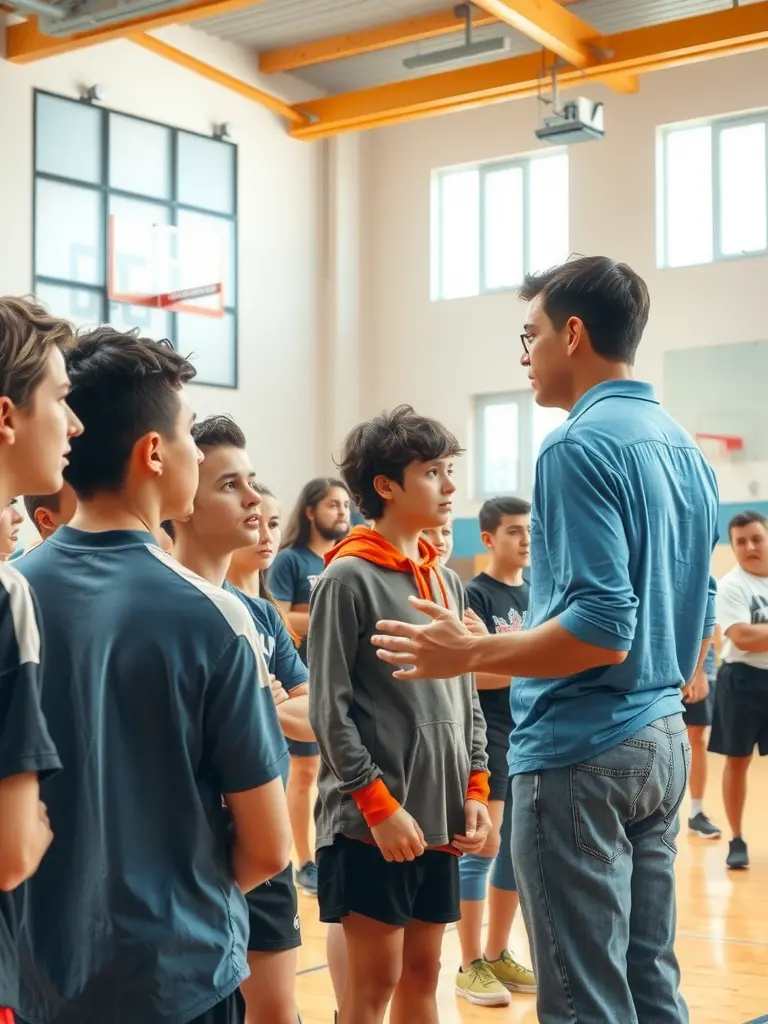
Sunlight spills onto the soft floor of the vast gymnasium, casting dappled shadows on the faces of every student beneath the transparent skylight. The white walls are adorned with various sports equipment; the iron arms of the basketball hoops stand tall, and the badminton net sways gently, creating a crisp echo of shuttlecocks being struck. The audience seating surrounds this small stage filled with hope and passion. Today, it is not quiet here; a group of students dressed in neat sportswear are embarking on a meaningful journey of learning sports skills under the guidance of their coach and teaching assistants.
Unlike the usual classroom setting, this group of students exhibits an unmistakable and intense focus. Each one's eyes are sharp, fixated on every movement of the coach. The tall, confident coach stands in the center, holding a racket or a basketball, opening with a warm smile yet a serious tone: "Do you all want to get stronger? How do you properly use your body strength to achieve the most efficient technical performance?" This question immediately bridges the gap between teacher and students, allowing each student to cast aside their nervousness and prepare for today’s technical teaching.
The coach begins with the most fundamental movements. He emphasizes the importance of warming up and stretching before exercise, reminding students that it is crucial for preventing sports injuries. The coach leads the entire class through shoulder, wrist, knee, and ankle stretches, meticulously explaining the significance of each movement. "Before every exercise, make sure to warm up your muscles and joints, as this is the key to protecting yourself and preparing for the upcoming high-intensity activities." The coach patiently circulates among the students, correcting movements one by one and offering encouragement.
After five minutes of warm-up, they officially enter the skill teaching phase. Today’s topic focuses on shooting and passing. The coach first demonstrates the correct shooting technique. With both hands on the ball, feet together, knees slightly bent, shoulders relaxed, wrists flexed, and eyes focused on the basket, he performs a smooth jump, and the ball swishes through the net. He also breaks down the shooting process, explaining how the wrist, fingers, and body work together in coordination.
The students quickly form groups and begin to mimic based on the instructions. Each group has a teaching assistant present to ensure every student receives proper guidance. Although some students’ movements may be a bit unpolished, their steps are clear, and everyone is focused. When technical mistakes occur, the coach patiently steps in to correct them: "When you shoot, your wrist needs to flex down; that way, the ball will have spin; maintain a stable lower body to concentrate your power."
Across the gym, passing practice commences simultaneously. The sounds of soccer balls rolling on the ground and handballs flying through the air fill the space. The coach demonstrates chest passes, one-handed overhead passes, and ground passes in pairs. He specifically reminds everyone during the demonstration: "When passing, keep your eyes on your teammates' positions; your arms and waist need to coordinate; the passing line should be clear, emphasizing precision and chemistry. Training isn't just about physical strength, but also about team cooperation."
As the students practice, they fervently discuss the challenges they encounter. One student giggles and asks, "Coach, how can I pass quickly without making mistakes?" The coach immediately demonstrates a passing mistake and offers a solution: "Before passing, you must signal well, keep your feet steady, and after passing, don’t relax immediately; you should actively try to receive the ball back from your teammate, which feels like a mental connection among the team."
Laughter and cheers frequently echo in the gymnasium. Whenever a student makes a beautiful shot, applause and cheers erupt in the room. When classmates pass perfectly, demonstrating great synergy, the teaching assistant also cheers loudly: "This is the best moment in sports; everyone is improving together!" Students who initially struggled with their skills gradually find their rhythm, and their agility increases, creating an uplifting atmosphere.
During practice breaks, the coach incorporates real-game scenarios. He organizes small group competitions, allowing students to spread their imaginative wings and freely apply the skills learned today. When the competition starts, the atmosphere in the gym becomes intense. Each group strategizes on how to leverage their strengths and cooperate, pushing their shooting and passing skills to the limit. The sounds of footsteps, breathing, and cheers rise and fall, and the competitive spirit even influences other teachers and students watching from the sidelines.
Notably, this practice method not only enhances individual skills but also fosters deep team collaboration. The coach explains: "The most valuable part of team sports is that everyone must learn to contribute their share in cooperation. Whether in offense or defense, everyone needs to continuously observe, communicate, and quickly adjust strategies."
Addressing outstanding student performances, the coach invites them to share their learning insights. One female student shares: "I was initially very afraid of shooting, but through the coach's breakdown of the movements, I discovered that learning each detail step-by-step builds my confidence. Also, encouraging each other in the team is really important; with everyone’s applause, I bravely tried various new stances without fear of making mistakes."
Another male student enthusiastically responds: "As long as I make eye contact with my teammates during passing, we can quickly develop chemistry. Compared to playing solo, it's much more exhilarating to attack and defend as a team. Thank you, coach, for always providing careful tips, which also allowed us to experience the fun of competition and cooperation throughout the process."
As the activity nears its conclusion, the coach gathers the entire class, his tone filled with encouragement and anticipation: "Today you all performed well, and there are more advanced skills awaiting your challenge in the future. Remember, learning movements is not about pursuing performance, but rather about letting your body and mind work together to appreciate the beauty of sports. Athletic training values not just technical skills but also attitude, unity, and perseverance."
During the course summary, the coach allocates time for questions, letting students ask about any bottlenecks or uncertainties encountered in the process. Questions like "How can I deal with on-site pressure without getting nervous?" and "What should I do if there’s poor communication with teammates?" arise in a serious yet lively manner. The coach responds one by one, clearly addressing them, combining psychological adjustment and technical details, encouraging students to ask more questions and try more, emphasizing that only through constant self-challenge can valuable experiences be accumulated.
At the end of the session, tranquility returns to the gym. Students still wear smiles of fulfillment, chatting in twos and threes about the exciting moments just experienced. For these students, every sweaty practice not only represents a skill upgrade but also symbolizes the persistence toward goals and the precious camaraderie of teamwork during their growth process. The interaction between teachers and students makes knowledge transmission rich and warm. This gymnasium is not just a place for athletes to sweat but a stage that inspires dreams and encourages unity.
Looking to the future, such skill training courses will undoubtedly cultivate students' strong willpower, joyful sports spirit, and good interpersonal skills. Coaches teach earnestly in the bright gymnasium, allowing each movement to embody love and professionalism, ensuring that this space, spanning all four seasons, remains filled with youth, vitality, and endless hope.