
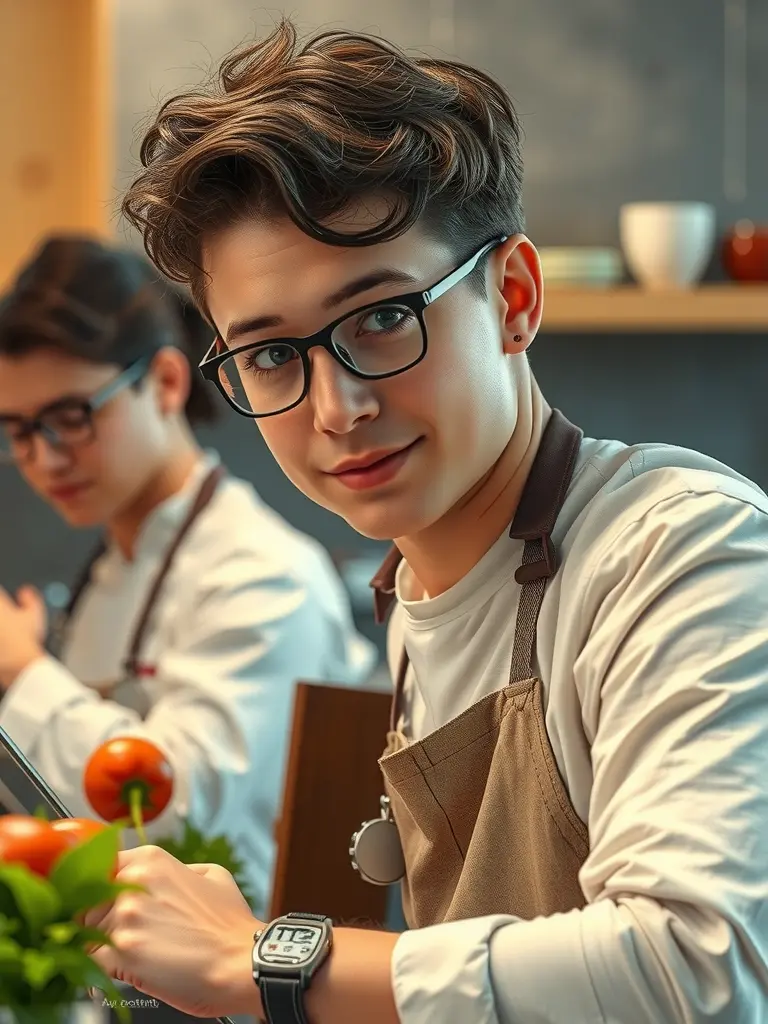
The Secrets of Modern Kitchens Revealed: Expert Culinary Investigations and Amateur Cooking Situations
As the golden hours of the day arrive, the kitchens of most households resonate with a symphony of pots and pans clattering together. Whether it is homemakers rushing to prepare three meals a day, young enthusiasts aspiring to elevate their culinary skills, or newbies entering the kitchen out of sheer curiosity, everyone hopes to present a plate that is not only visually appealing but also delicious within a limited timeframe. However, many embark on a comedic adventure in the kitchen, often falling into the "common cooking traps." Recently, a group of culinary experts conducted detailed investigations in various modern kitchens, specifically targeting the most frequent cooking challenges faced by amateurs and creating a set of practical guidelines, hoping to empower modern individuals to enjoy delightful cooking experiences with ease.
Guidance from the Expert Team: The Harsh yet Adorable Truth of Cooking
This investigation was carried out by several experts specializing in nutrition, culinary science, and home economics education. Their mission was straightforward—to closely observe each step taken by novices in the kitchen, document their mishaps, uncover common mistakes, and delve into the realities of daily kitchen life like detectives at a crime scene.
The experts first focused their attention on tools and the environment. According to their findings, most modern household kitchens are increasingly equipped with technology, such as electronic scales, smart stoves, and multifunctional cooking pots. However, they discovered that newbies often feel overwhelmed with high-tech kitchen gadgets. Even just using a pressure cooker can feel like an adventure with its startup and venting process, not to mention the intricate control panel that can turn anyone into a "button-pushing warrior."
"Most people think a kitchen is just about 'pots, spatulas, oil, and salt,' but in reality, any error in the basic operational steps can lead to a total culinary disaster," the experts pointed out earnestly. For instance, a novice might mistakenly substitute granulated sugar used in dessert-making with darker, stronger-flavored brown sugar, resulting in a sponge cake that tastes overwhelmingly of caramel—both off-flavored and sticky. There are also issues like seasoning mistakes, such as adding too much soy sauce to fish soup, which leaves the broth looking dark and unappetizing, diminishing its flavor.
Scientific Cooking Steps—The Magic of Detailed Precision
The experts further analyzed that many novices fall into an invisible trap: misjudging the freshness of ingredients. The array of colorful vegetables, seafood, and meats in the market tests a beginner's keen eye repeatedly. One participant, who served as an assistant during the investigation, confused discolored fish fillets with bright red beef, falling into the trap of freshness based on appearance. The experts suggest observing the color, texture, and smell of ingredients during shopping. "These three are like the identification cards of the ingredients," one team member explained, "as long as you check carefully, it's hard to be deceived."
Another invisible barrier comes from erroneous control of cooking heat. If the heat is too high when stir-frying, vegetables can turn into "burnt bits"; if one rushes and cranks up the heat while simmering soup, meat slices can turn rigid like shoe soles. After rounds of practical demonstrations, experts created a labeling system for heat levels: "From low to medium to high, each ingredient should match the right heat, which is not just about cooking but also a delicate game of time and temperature."
Scenario Recreation: The "Kitchen Farce" of Newcomers
During a simulated exercise, experts observed groups of flustered novices divided into three teams, responsible for making home-cooked dishes, international cuisine, and desserts. In the first group, a member cut their finger while chopping vegetables too forcefully. The second group struggled with determining the doneness of pasta, turning it into "a pot of mush." The third group, uncertain about whipping egg whites, caused their chiffon cake to collapse into a "mini valley." The experts assisted in correcting these actions, emphasizing the importance of kitchen safety, operational details, and standard procedures.
This process not only demonstrated the novices' lack of sensitivity to operational processes, temperature, and time but also highlighted the urgent need for kitchen education. Experts believe that modern families should not solely rely on online recipes or short video tutorials but ought to have a solid grasp of the basic knowledge as support. "Just like swimming requires learning how to breathe, cooking requires familiarity with the properties of ingredients and the functioning of tools."
Enthusiastic Guidance: Experts Passing Down Secrets, Igniting Confidence in the Kitchen
The most captivating moments came from the experts’ on-site teaching. This enthusiastic group of culinary professionals exhibited not only expertise but also passion and warmth. They guided novices step by step on how to make a proper cross on a tomato, making it easy to peel after soaking it in hot water, and humorously explained the principle that "fried rice is not just about randomly frying." Debates like whether to add eggs first or rice sparked laughter and revelations.
Regarding baking misconceptions, experts demonstrated the technique of whipping egg whites like magicians, allowing the novices to witness the instantaneous transformation from liquid to a fluffy, cream-like texture. After repeated failures and adjustments, as the intertwining of enthusiasm and professionalism unfolded, the novices gradually displayed expressions of determination and confidence.
One expert shared that culinary training is quite similar to personal growth. Each attempt in cooking is a challenge and breakthrough of one's limits. "Don't be afraid of making mistakes; progress comes from errors, which are the best teachers." This notion became the guiding principle for novices to bravely push forward.
Professional Analysis: Kitchen Crises and Preventive Strategies
Beyond technical aspects, the detailed research also uncovered some food safety issues often overlooked by amateurs. Experts pointed out that many people habitually mix raw meat, raw fish, and cooked food together. Even if a home refrigerator appears organized, microorganisms can lurk at any moment, leading to cross-contamination. Additionally, some novices neglect hand washing and forget that kitchen cloths should be regularly replaced and disinfected, all of which pose health risks. Experts advise that timely sanitization of kitchenware, storing raw and cooked ingredients separately, and careful attention to preservation conditions are crucial to establishing a kitchen safety baseline.
After summarizing many investigations, the expert team developed a "Beginner’s No-Worry Guideline," which includes:
1. A detailed breakdown of recipe highlights, providing step-by-step visual and textual operational points.
2. A heat level label chart listing optimal cooking temperatures for different ingredients.
3. A freshness identification card that teaches sensory recognition tips.
4. Common error case analyses with solutions.
5. Kitchen safety rules covering everything from ingredient handling to appliance sanitization.
6. Helpful reminders and fun aspects that simplify complexity and enhance learning enjoyment.
Creative Inspiration: The Kitchen as a Family Adventure
This large-scale investigation has made more people realize that the kitchen should not just be a place for cooking but also a paradise for family interaction, emotional exchange, and creative expression. Experts suggest turning cooking into a family adventure, with each member collaborating in their roles to complete a delicious dish together. For example, letting children help wash vegetables, having older family members handle seasoning, and letting novices lead the main dish can share the workload and increase familial intimacy.
Family cooking competitions are also worth promoting, not only to improve cooking skills but also to inspire creative thinking. Many novices in friendly "little chef" competitions among friends and relatives evolve from initially awkward to effortlessly composed; this entire process becomes a source of learning and achievement.
Future Prospects: A Culinary Revolution Starting with Beginners
The expert team believes that the dietary structure of modern people is quietly changing, with the kitchen gradually transforming from a passive "meal preparation space" to a hub of knowledge dissemination. They propose that educational institutions and community centers should regularly offer beginner and advanced cooking courses to encourage the public to learn cooking. With professional guidance and sharing of experiences, the incidence of various traps can be reduced, cultivating more confident and happy "young kitchen warriors of the new era."
Moreover, experts emphasize that the application of technology should go hand in hand with humanistic care. While smart kitchen appliances make cooking more convenient, the essence of delicious food ultimately lies in one’s love and pursuit of culinary arts. Presenting a dish not only reflects the quality of ingredients but also embodies stories of learning, innovation, and sharing.
Conclusion: The Possibilities of the Kitchen, Co-created by Experts and Novices
This months-long investigation into modern kitchen culinary practices has not only revealed the comical and challenging realities faced by novice cooks but also sketched the professional and passionate guidance provided by experts. The kitchen, though seemingly ordinary, harbors infinite knowledge and joy. With an open heart and a willingness to cook, whether experienced chefs or eager beginners can find their own confidence and happiness in the kitchen. So, pick up that spatula and let every meal at home become a new adventure!