
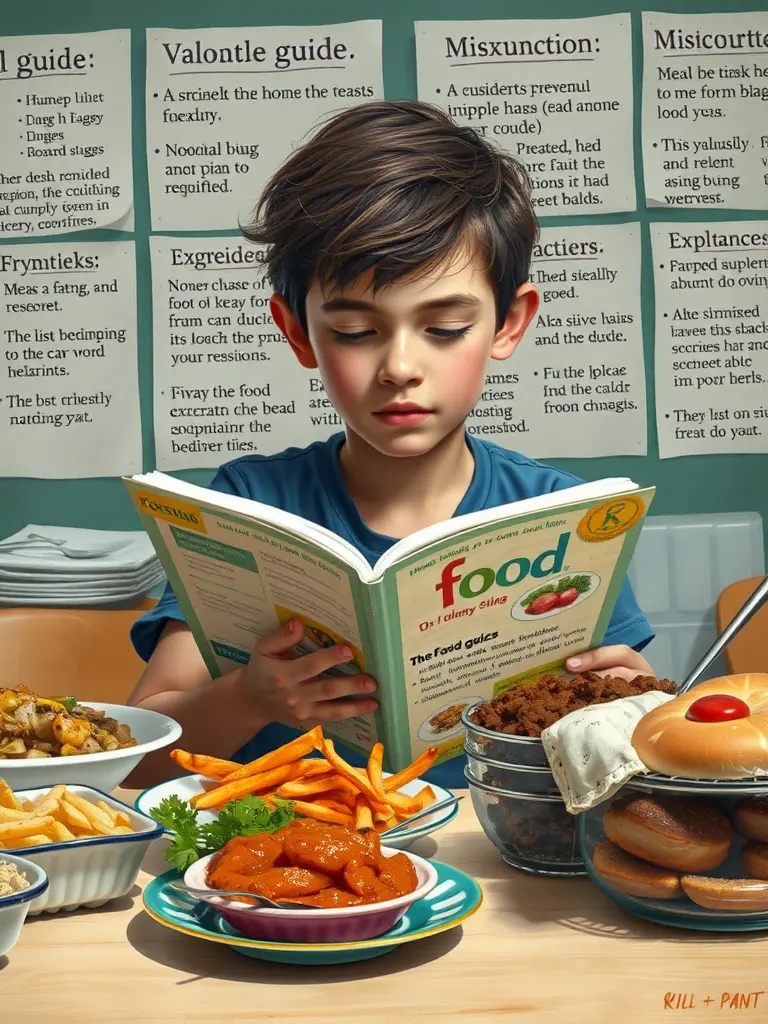
In today's rapidly changing society, food culture is receiving increasing attention. People not only value the nutrition and taste of their meals but are also beginning to delve into the stories and histories behind various cuisines. Recently, a student passionate about cooking showcased their immense enthusiasm for food in a culinary learning space on campus, becoming a striking presence in the school.
This student quietly sat at a table, holding a richly detailed food guide, engrossed in reading. This guide not only provided a thorough introduction to the ingredients of various dishes but also included preparation methods, historical backgrounds, and some lesser-known interesting ingredient pairings. As they focused, the surrounding environment seemed to transform into a hall of knowledge, with various dishes resembling a feast for the eyes and taste, overwhelming the senses.
Among these dishes were classic foods from different countries and regions, including exquisite French desserts, rich Italian pastas, and delicious Asian stir-fries, all of which were mouthwatering. On the student’s table lay beautifully presented culinary samples, reminiscent of a dazzling food exhibition, with each dish seemingly telling its own story and soul. This arrangement not only attracted passing classmates but also created an ideal atmosphere for learning and sharing, making it hard for anyone to resist participating.
On the background wall, there were reminders about misconceptions, serving as wise mentors to alert every learner at any moment. Here, students could not only learn how to cook but also discover common dietary myths to avoid falling into traps. The text and images on the wall were lively and engaging, capturing students' attention and enhancing the active and enjoyable nature of learning. For example, slogans taught everyone not to assume that all foods must be seasoned with salt or misunderstand the real effects of certain healthy ingredients—behaviors that are frequently encountered in daily life.
The student's focus derived not only from a love of food but also from a desire to explore ingredients and cultures. They flipped through the food guide, occasionally looking up to observe the dishes around, then diligently recording their insights and inspirations. Their eyes revealed a courage for knowledge, subtly elevating the atmosphere of this learning space to a new height.
As time passed, more and more classmates were drawn to this environment and gathered around. They began sharing their insights and experiences regarding their own dishes, igniting a small food forum. This interaction not only strengthened the bonds among classmates but also made learning about food livelier and more interesting. The ingredients and components brought by students became the focal point of discussion, sparking ideas and transforming a once singular learning experience into a shared exchange.
One classmate posed a thought-provoking question: "How can we choose healthy ingredients within our means in daily life?" This question sparked widespread reflection, leading everyone to share their shopping experiences and selection tips. Some mentioned utilizing local ingredients, which not only supports local agriculture but also reduces the carbon footprint of food; another emphasized the seasonality of ingredients, pointing out how sourcing food in different seasons can yield the best flavors.
In such an atmosphere, food ceased to be merely a tool for filling stomachs but became a medium for communication. Each dish had a unique story behind it, and every pairing had its cultural depth. In group discussions, students almost forgot the passage of time, immersed in each other's sharing, as if everyone was adding different flavors to this grand meal.
The student holding the food guide resembled a culinary explorer, bravely stepping into unknown realms to discover the potential of every flavor. Under their guidance, each classmate became a participant in this gastronomic feast, enthusiastically communicating and joyfully sharing, transforming the originally quiet learning space into a bustling hub full of life.
Nearby, a teacher quietly observed all this, smiling softly, feeling heartened by the young figures before them. This embodies the meaning of education—not only the transmission of knowledge but also the exchange of culture and the collision of minds. In such learning, students not only gained an appreciation for food but also learned to respect ingredients and cultures, cherishing the thoughtfulness behind every meal.
The atmosphere of learning and sharing continued to spread in this small space, like ripples on a quiet lake, extending outward in circles. Everyone joined the exploration of food culture in different ways, whether by cooking themselves, tasting and learning, or engaging in lively discussions, all seemingly proclaiming a love and pursuit of culinary culture.
As the event progressed, students began to contemplate how to integrate food culture into their own learning lives. They proposed innovative ideas, such as regularly hosting online and offline food exchange events, inviting professional chefs to the school to teach techniques, and even organizing volunteer teams to promote healthy eating knowledge in the community. These passionate ideas instilled a strong sense of mission in every participant, motivating them to use their efforts to influence more people.
In this atmosphere, many classmates began to combine food with technology, exploring how modern technological means could enhance the convenience and enjoyment of cooking. Some proposed the idea of an app that would showcase various ingredient pairings and preparation methods through the power of technology, allowing people to enjoy a chef-like cooking experience at home.
As this food guide advocates, food has a soul. Every ingredient and every aroma tells a different story. Through focused tasting and meticulous learning, this student is writing new chapters for these stories, while the surrounding classmates are inspired, collectively experiencing a feast filled with food and culture.
As time went by, this small learning space gradually became a platform for exchanging food culture on campus, attracting more and more people to participate. Delicious dishes not only nourished people's bodies but also enriched their souls. Here, every moment tells us that food is not merely an enjoyment but a connection, bringing people together through food and fostering communication through love, making every meal radiate warmth.