
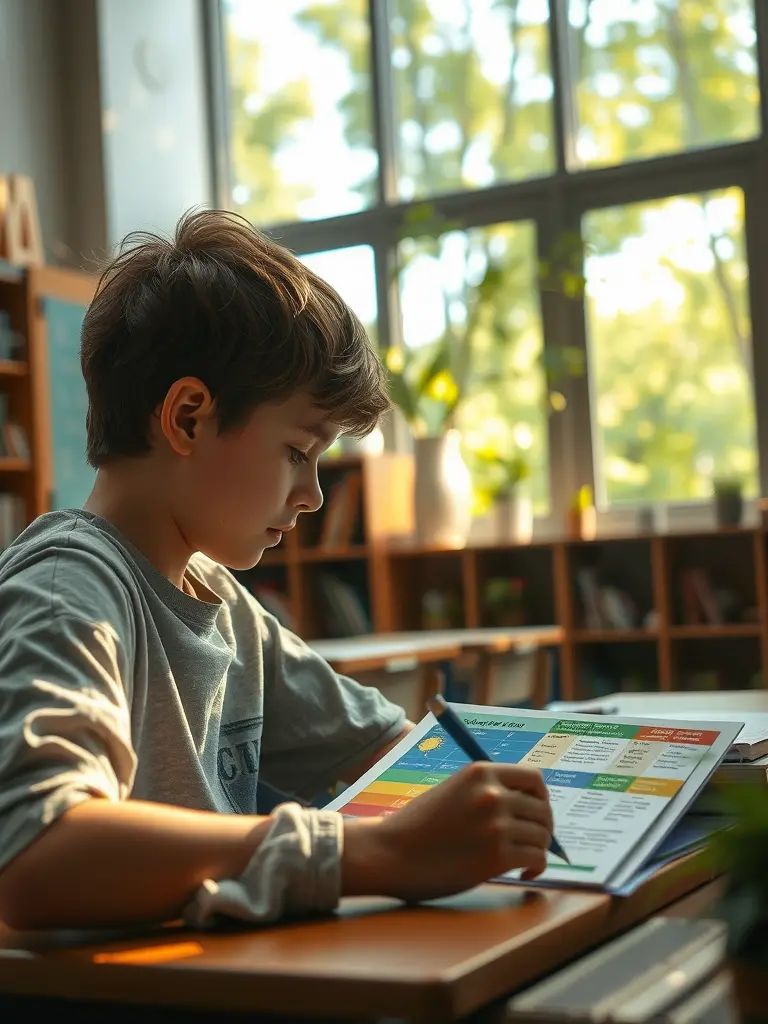
In a uniquely styled eco-friendly classroom, students are busy with a lesson on sustainable development. One student is focused at a desk, comparing colorful environmental data sheets. Sunlight filters in through the green trees outside, adding a touch of vitality and energy to the classroom. The walls are adorned with various environmental posters, from plastic recycling to how to reduce carbon footprints, each showcasing the power of knowledge and humanity's respect for nature.
This lesson aims to help students understand the importance of environmental protection and the specific actions they can take in their daily lives. As awareness of environmental issues deepens, more and more young students are beginning to take on the mission of protecting the planet. This focused student, surrounded by thick stacks of materials, is meticulously going through details on renewable energy research and current global warming trends. His brow is slightly furrowed, as he seems to be pondering how to integrate this wealth of information into an impactful report.
As the class progresses, students are divided into small groups, each discussing and researching different environmental topics. The classroom echoes with their enthusiastic voices as they actively share insights with one another, some discussing the burden of plastic bags on the environment, while others explore how to promote community environmental actions through individual efforts. This learning approach not only enhances interaction among students but also broadens their understanding of environmental knowledge, allowing them to view and solve problems from multiple dimensions.
The scenery outside adds to their inspiration, with leaves swaying in the breeze, bringing a refreshing atmosphere that seems to call the students to action. One student suggests starting with small changes at home, promoting a ban on single-use plastics and encouraging those around them to understand the importance of environmental protection. Such ideas not only reflect the students' desire to change the world but also demonstrate their awareness of their own influence.
At this moment, the atmosphere in the classroom is filled with creativity and energy. Environmental slogans hanging on the walls, like "Today's choices, tomorrow's future," inspire each student to consider how their actions shape the future. It feels like a place of inspiration, where students blend their ideas and spark moments of wisdom.
As time goes by, students present their research findings to their classmates in the form of presentations. Each group member stands confidently in front of the projection screen, articulating their views. The focused student stands nearby, his gaze reflecting encouragement and support, creating a scene that embodies the power of teamwork. Each group displays its unique creativity, with every member earnestly sharing their understanding and contributions to environmental protection.
During the discussions, some points raised by students even capture the teacher's attention, making it a two-way learning experience. The teacher occasionally pauses to ask students for their thoughts on certain data or suggestions for improvement. This interaction transforms the class from a one-sided lecture into a feast of knowledge.
As the lesson concludes, everyone gathers in a circle to share their takeaways from the class. One student sincerely expresses that environmental protection is not an unattainable goal, but something everyone can achieve in their daily lives. Another classmate adds that if everyone starts small and gradually changes, these tiny efforts will eventually accumulate into the power to change the world. In this environment, students motivate each other to move forward, as if each person has already become a little environmental guardian.
Of course, these practices do come with challenges. The students realize that promoting environmental actions must confront various resistances, such as people's reluctance to adopt new habits or the lack of necessary knowledge and resources. However, they understand that it is precisely these challenges that make change particularly precious and meaningful. The enthusiastic atmosphere in the classroom and the students' proactive explorations undoubtedly lay a solid foundation for their future environmental endeavors.
By the end of the class, the sunlight has begun to set, and shadows dance outside the window as the voices in the classroom gradually quiet down. The students write on the blackboard, "Action is the best learning," to express their commitment and expectations for environmental protection. In this moment, they are not just seekers of knowledge; they are pioneers of future change. The concept of environmental protection has taken root in each student's heart, and this passion will accompany them as they grow.
In the future, these youth will step into society with enthusiasm, bringing the knowledge and beliefs acquired in this lesson. Their words and actions will influence the next generation, creating a virtuous cycle of environmental work that turns this seemingly distant dream into reality. This lesson is not just about disseminating knowledge but also about sparking a revolution of thought. Within them, the seeds of environmental consciousness have begun to take root, eagerly awaiting the moment they will blossom into brilliant flowers.