
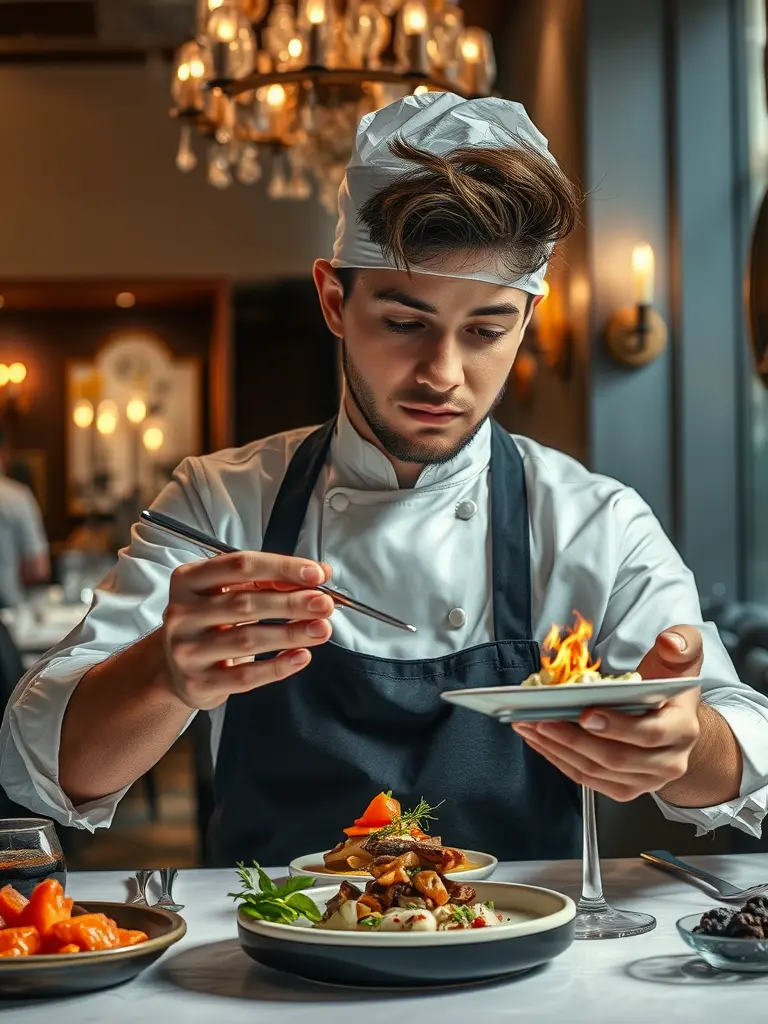
A food expert recently conducted a special culinary comparison test at a renowned fine dining restaurant, aiming to explore the charm and artistry of two exquisite dishes in depth. The overall atmosphere of the restaurant was enveloped in soft candlelight, creating an elegant and relaxed dining environment for those who entered. Amidst the comfortable interplay of light and shadow, fresh ingredients and metallic utensils were neatly arranged on the table, exuding an air of sophistication and refinement.
The expert's goal was to analyze the subtle differences and similarities between the two dishes through his own taste and observations. The first dish was classic French foie gras, paired with fresh figs and a slightly acidic red wine sauce; the second was a modern molecular gastronomy creation that showcased the latest techniques and flavor combinations, accompanied by crispy fries and cod roe.
First, let's take a look at the historically rich French foie gras. The expert began by uniquely describing the presentation of the dish: the foie gras was delicately sliced, displaying an enticing golden hue, and gently placed on a white porcelain plate, surrounded by vibrant red figs and red wine sauce, creating a scene that was both noble and luxurious. As the candlelight flickered, the dish danced in the light and shadow, almost narrating the long-standing traditions and legends of classic French cuisine. The expert reached for a small piece of foie gras, its delicate texture melting on his tongue, as the rich aroma enveloped him like a delicate melody, intoxicatingly enjoyable. Paired with the slightly tart red wine sauce, it instantly elevated the entire taste experience, as if each bite told the tale of an irreplaceable classic.
Next, the expert turned to the modern molecular dish. Combining fresh seafood with innovative cooking techniques, this dish released even more surprises through its diverse textures. The crispy fries were cleverly paired with tender cod roe, emanating the essence of the ocean and visually captivating. As the expert took a bite of the dish, the hair-thin textures intertwined with the seafood's freshness, as if attempting to blend a dialogue between the modern and the traditional into a brand-new story.
Throughout the tasting process, the expert's keen observation ensured that no minute detail was overlooked. First, he conducted an in-depth analysis of the freshness of the ingredients. Whether it was the selection of foie gras or the seafood in the molecular dish, every choice reflected the chef's dedication. His notebook was filled with meticulous records of each delicate action and creative process.
The control of heat was also a topic of interest in both dishes. During the preparation of the French foie gras, achieving a silky texture without dryness under high heat required a culmination of experience and skill, illustrating the expert's love and adherence to the art of cooking. In contrast, the innovative methods of molecular gastronomy involved cooling the ingredients to an appropriate temperature to create different textures and sensations, representing not only a technical challenge but also a full display of the chef's creative spirit.
Finally, at the conclusion of the tasting, the expert's summary of the two dishes was particularly thought-provoking. He noted that whether it be traditional French cuisine or modern molecular gastronomy, both embodied the infinite possibilities and diversity of culinary art. Each dish was the result of countless experiments, adjustments, and creativity, and this spirit of exploration is what truly constitutes a gastronomic journey. He hoped that this comparison would allow more people to understand the depth and breadth of cooking, beyond just a sensory pleasure.
In this splendid yet authentic setting, the food expert played the role of a connoisseur, showcasing a love for life through the brilliance of culinary arts. Behind each dish was a re-understanding of the source of ingredients, the process of preparation, and the taste experience. He wove this passion for food into words, enabling people to not only savor the beauty of gastronomy but also to feel the story behind every bite.
In this passionate realm, the expert served as a guide, leading participants on a journey to explore culinary delights. By comparing these two dishes, he was not just describing food but transforming the touch of the soul into a sensory feast. Ultimately, he hoped that every diner could find their own delicious exploration within such a fine restaurant. If cooking is art, then this expert's navigation undoubtedly lit the candlelight in every person's heart along the path of beauty.